Retired; Octogenarian; husband, father and Opa & Great Opa; interested in celebrating/contributing and distributing the blessings we have as Christians in Canada's fair land - trying to be a bumbling, humble blogger.
(I wrote about this as being older, I find that community life is now, in the 21st Century, far more complex than ever before and you need to be computer smart – someone said: that the New York Times week-end edition contains more information than a 17th century person would have gained in a life-time!) – the above featured picture: generated by AI
Recently I received a letter from CIRO* (Canadian Investment Regulatory Organization) informing me that there had been a cyber security attack/breach on their records and to give me some protection against possible future attempts (scamming or misuse of my info), they offered two (2) years of personal identity and financial assurance/insurance via Equifax**. Of course, for that I had to register as an Equifax customer (who somehow or other already knew about me – how did that happen?).
Now as a small investor I was not aware that my name was located anywhere at the CIRO office. Checking through however, I searched and noted (never gave it any attention before!) that my personal Mutual Fund advisor’s connected Capital funds firm is a member of CIRO (it is on their letter head). In fact, to be a legitimate certified financial company (selling stock, mutual funds etc) they need/must adhere to the coded investment industry common strict rules, managed as members of CIRO, a financial watchdog (for the small and big investors) in Canada. Doing this search made me think, what else is there that I do not know about who has my (financial) records?
Let’s go back to 1960. After high school graduation, as my first job, I was a bank employee. In the branch I served at, we had a couple of thousand customer accounts, Savings, Personal Checking and Business Current accounts. Ordinary people could walk into the bank and open an account; state your name and address, maybe a phone number and employer, sometimes to get it right we would ask for ID and so after getting a signature on the ‘account detail card’ and assigned a number, you had your bank account. The deposit(s) and withdrawals were noted in a little book and you were now our customer. In future dealings you would ‘personally’ attend at the branch, present your book and conduct your business. Cash was king, but sometimes you could write cheques. If you had your pass-book, you could access your account and your signature would (could) be compared by the teller to the bank’s records. Records were only maintained at the branch and locked in the vault at the end of the day. Ok simple and safe.
Nowadays, we do things over the internet. No signatures are compared; no personal attendance necessary and the whole world is your playing/investing/banking field. Wow, is that an eye opener for everyone! And I mean everyone in the world, even the bad guys. Yes, especially the bad guys!
Why, even yesterday morning at 8:15 AM (at breakfast) I received a call with a Montreal code of 613, from a person with a very rapid foreign accent telling me that there had been suspicious ‘Activity From My IP Address’ on my internet connection that could expose me to bad issues; but he could help. I asked him for details: first I asked him what his phone area code was, he said Montreal and that fit with the number I saw on my phone screen, then he gave me my name, address, postal code and IP supplier. I knew at that point that this was a scam because he said the wrong IP (Internet Provider). I told him that he was a scammer and politely said good-bye and hung up. Now how did he know all these things about me? 21st Century digital information know-how! My information is like a giant billboard hanging in the sky!
I say this because when I checked at Equifax I noticed (after I opened my Equifax account to obtain CIRO protection) that I had already been counted and IDed with a number. This number 854 tells the world that I am an ‘excellent’ person. Good to deal with and have considerable means to conduct commerce in the world. It even speaks to my honesty and status with corroborating info of my financial and personal details. Again, like a giant billboard in the sky! I am trustworthy because I have (am) a number in the range of ‘good guys and girls’. This number now becomes my ID and can be accessed by anyone.
Come back with me to 1975. I am still a banker and the bank has introduced a new system for customer lending. Your personal information has now become a sum of scored numbers, every bit of your info is now worth so many points. The score goes up if you have lived at your present address many years, it goes up if you have been employed many years, your salary range determines your score, your occupation determines your score, your present borrowings determines (or decreases) your score, if your wife works determines your score, if you have 2 or less children it increases your score, but 3 or more children it decreases your score and at 5 or more**** gets you a big nothing, zero! Why? the sum of this scoring will, they said, help identify loan risks and anyone below the sum of 200 magic cut-off points, would not be in the bank’s interest to deal with. The business of the branch and its customer make up, is now all reflected in scores, even to the evaluation of the bank manager’s judgement. They said, you could determine future management issues and lending risks by info given and credit dispersed on the basis of customer scores.
Since then, this idea of scoring is now the norm. It is done on all financial transactions, job evaluations, credit card limits, insurance and every other type of interaction between people and organizations. And I know from my banking experience that scoring can be helpful, don’t get me wrong.
But, how do you feel being reduced to a number? To be known by your number. Not you personally but your number. Well?
The minimum score necessary to get a credit card in Canada is set at 660. However you can get a ‘Neo Secured Mastercard’ *** if your score is between 330 and 559. A score of 560 is a fair credit risk, a 660 is good, 720 very good and 760 and above excellent. So, there you have it, we are all just numbers. A low score also gets you a higher loan interest charge, as high as 31%. And at the suggested monthly payment it will go on forever!
Now today, more of our daily routines are marked by computers; and as you know they run on numbers. Credit scores can easily be inserted into the ‘value’ of you. Your habits, your health, job accomplishments, your car driving record, your doctor visits, your contacts with the law, your attachments to organizations, your memberships, your health, your voting habits, your nationality, your trips abroad and to where, your living habits, your loan repayment schedules, can all be measured in numbers. The list is endless. Unless you live in a cave on a far away world, every interaction in this world is now recorded, scored, studied and dissected as to your value. Not just yours but businesses, organizations and even nations have a number. Everything is a number. And the most upsetting is that this is valuable and is sold and transported everywhere, top info for a lot of actions and dealings in the whole world. Now AI can determine yours and my future. Now that can be in a ‘blitz’ of a second. Scary isn’t it?
Ancient truth stories tell many wonderful revealing things. One is, there is nothing new ‘under the sun’. What has been, now is and will be again. It is the way of life!
Consider this tale: At a state celebration banquet held in Babylon by the great king Belshazzar (553 BC) attended by thousands of his officials and their wives; a mysterious hand suddenly appears writing on the wall. It writes: “MENE, MENE, TEKEL, PARSIN.” ‘You have been weighed (counted) and found wanting!’ This panicked the king and all his officials. And the tale goes on: that very night, under the cloak of darkness, Belshazzar, the Chaldean king of Babylonia, was killed. Then Darius the Mede, in his 62nd year, gained control of the kingdom.+
Is this, what all of this number taking will get us in the end? Counting the cards we hold? Conflict, jealousy, domination, tyranny, war………….the strong (high scores) will always win?
Yeah, I know, why be so pessimistic?
I guess, I want to make sure you know that our lives are complex and dangerous…………and to tell you the truth, I really wrote this to warn myself and to be safe and not get scammed into trouble…….++ life is precious! Always ask that stupid question: Why?…….and if the answer is something you do not understand, ask someone you trust for advice……things and people, are not what they appear to be……..but together we are stronger!
Jesus said: “Blessed are the poor, the meek, the humble, the mournful, the peacemakers, the merciful, the honest and those that have pure motives; yes especially those with true empathy; only those with all these human qualities are the ones that will inherit the earth and will see the kingdom of God” (Gospel of Matthew chapter 5)
Peace be with you!
JS January 28th, 2026
According to my MS Copilot search: CIRO, short for the Canadian Investment Regulatory Organization, is Canada’s national self-regulatory body that oversees both investment and mutual fund dealers. It was formed as the successor to the Investment Industry Regulatory Organization of Canada (IIROC) and the Mutual Fund Dealers Association of Canada (MFDA), with the goal of protecting investors and upholding the integrity of Canada’s capital markets. By bringing together the regulatory duties of these two organizations, CIRO plays a key role in ensuring compliance and maintaining market standards.
**Also my other search: Equifax Canada Inc is one of two credit bureaus which are private companies in Canada, that (the other being TransUnion Canada) collect, store, and share information about how Canadians use credit.
***if you borrow on your card you may be charged up to 31% interest, a beastly amount that may never be repaid, all based on your score.
**** As a bank employee I could borrow at special low bank rates. I bought a new car and borrowed from the bank. My score was just under 200 because I had 5 children. 2 children would have been better and would have scored me above the 200. By my low score I was a ‘bad risk’. Another example: As bank manager, I authorized a small loan (before credit cards) to a man with 7 children to help them over a financial crunch, (I think it was a car repair), and his score was not quite 200. The bank evaluation team criticized the loan (and my knowing of my customers) and pointed out that 7 children would be a disaster. I in turn argued that he loved his family and would do anything to meet his responsibilities.
+See: Book of the prophet Daniel chapter 5 verse 25 to 28 Tr. the Voice-from biblegateway.com
++ received another call this morning about my IP connection. (Must be the SCAM of the month series)
The Story of Cor and Sjaan (Jane) Groenewegen was written by Cor Groenewegen (included are his excerpts written for Sam Hann’s Journal) carefully typed and edited by daughter Louisa F. Bruinsma
There is a Dutch saying that goes like this: ‘In het heden ligt het verleden, In het nu wat worden zal!‘ which freely translated into English is: ‘What we have today, came to pass yesterday!What the future will bring;will much depend, how we live and work today!‘ or ‘In the present lies the past, The today will shape the future!‘
Great miracles have happened in the short lives of immigrants in the great countries such as USA and Canada. We must not become haughty in our hearts but say with Psalm 75: ‘0 God, we give thanks,We call on Thy name and recount Thy wondrous deeds.‘
Our family looks back to 1947 when Cor and Jane Groenewegen and their five children, between the ages of two months and five years, crossed the Atlantic Ocean in the S.S. Waterman, a ship originally designed as a military vessel to transport soldiers. The Lord gave us two more children in Canada and 18 grandchildren.
My grandfather was a farmer, so I wanted to become a farmer. He was a God-fearing man and was always warning us to love the Lord’s good commandments. When my grandfather lost his wife and became very old, he loved his children and grandchildren so much he wanted us to see him at least once a week. He watched his children and grandchildren. When we fell into sin, he really warned us that the wages of sin is death! When he was getting weaker before his death, I, as a young boy, asked him, “Grandpa, are you ready to die to meet God in heaven?” His answer was, “Yes. He that is God is the God of salvation and unto God belongs the issues of death. “
My father, Teunis Zent Groenewegen (which translated means ‘Green Ways’), was born on a small island called Rozenburg. This island was born out of the North Sea around the time our Savior was born in Bethlehem.
There is a saying, “The sea gives and the sea takes.” Through the ages some places on this earth are swallowed up in stormy days by the sea but many small and large islands of the Netherlands have their existence from low and high tide, and especially on stormy days, land disappears, and other places grow fast when sand and clay (sometimes mixed) come to the shore. Over the ages this created large and small islands which we can see on the map as South Holland and the province of Zeeland. Many ‘Rozenburgers’ left the small island of Rozenburg from this small country called The Netherlands during the last 150 years to come to Canada and the USA.
I will try to display the great things the Lord has performed in the life of the Groenewegen family.
Both Mom and I are of about the same age. Mom is born April 5, 1913 and I, Cornelis, was born March 7, 1914, both on the island Rozenburg, the Netherlands. Cornelis’ parents had 14 children. We grew up in a time when parents had to work hard to establish and operate Christian schools, schools which later received government funds. My mother’s father was Pieter Kleiwegt (translated “clay road”). He was a contractor who my brother, the late Peter Groenewegen, who lived in Blenheim, is named after. My grandfather built the high and big windmill which is still standing as a monument at Rozenburg, South Holland. Wind was what gave power in the days before gasoline engines and electricity. When I was five years old in 1919, my father bought a farm next to the windmill, and we became good friends with the mill people. The windmill was there to cut grain for men and beast.
The name of the family who were these good neighbours was Klaas VanderWilt. Sometimes as children we were allowed to climb all the steps to go to the top to over see the island Rozenburg with the great river, “The Waterweg”, which brought the great sea ships to the harbour from New York. But someday in the year of our Lord 1947 we, me and Jane and five children, and many other families and single men and women, were going with a ship called “The Waterman” through this river on the way to a far country called Canada. But more on this later.
There is not so much to write concerning the Kleiwegt family because not many of them immigrated to the other side of the Ocean. Only one family we know of is in Canada, Klaas Kleiweg on Vancouver Island. Other brothers and sisters of the Groenewegen tribe who crossed the ocean after the Second World War are: Peter and Mensk Groenewegen in Blenheim, ON, Cornelis and Jane Groenewegen in Burlington, ON, Leendert and Willy (Groenewegen) Boers in Ancaster, ON, and Jan and Dith (Groenewegen) VanderEnde in Chatham, ON.
Two sons of my uncle, Cornelis Groenewegen (who was very proud that I was named after him), also emigrated: Cornelis Groenewegen in Brantford, ON, and Huibrecht Groenewegen in Hamilton, ON. This uncle Cornelis was very proud to have someone named after him and I had to come often to his house, but especially on Sunday after church. When I became twelve years of age, he came to my birthday with a very good watch.
My father’s father was Jan Groenewegen a “kleine boer” (small farmer). As a boy of twelve my father did not like to work on the farm. Although he was born a farmer but he was also a businessman. For some reason my mother’s father did not like the Groenewegen family, so the few times they could see each other were not many, so the only solution was to get married. Both had a spirit of enterprise which is maybe why I later decided to step on a boat and cross the ocean.
As a boy of twelve one night he was in his bed on the floor above where his parents slept, and overheard his parents discussing the great financial problems of the great depression of that time. Oma said to Opa that business was bad and they could not pay their bills. His mother came up with a great idea. “Jan,” she said, “What about the two great baskets we have. Next morning we fill them with eggs, put a yoke on Teunis’ shoulder with the eggs in the baskets and send him to the city of Maasluis to peddle them.” There was little market for the eggs in Rozenburg. That night my father could not sleep. He saw himself selling eggs in Maasluis, meaning he did not need to work any longer in the fields, which he hated. And there he went. He built up such a large egg business that his father could not fill all his orders. So he had to go to other farmers to buy eggs. The business went so well he had a little cart with a large dog in the front to pull it and he could even sit on it.
One day he got a big setback when he was riding on a road which was on the top of a dike. The dog saw another dog beneath the dike and went after it with the result that the cart with all the eggs rolled over and over below the dike and all the eggs were broken. My father was a hard working and progressive businessman and his business was always growing!
I remember when I became five years old, he had built up a big business. My mother handled a grocery store and he was a trader in cattle and horses. But it was difficult doing business in the great first World War. He bought a 7 hectare (18 acres) farm in 1919 and from then rented land so his farm was 40 hectares (100 acres). He had a barn with pigs and in winter also a barn with cattle.
My brother Herb had to learn how to grow produce in greenhouses so we had also three greenhouses growing early lettuce, tomatoes and grapes. He was a very social person. I remember when I was a boy of twelve he took me to the great cattle markets. And anyone who saw my Dad from afar, it was always “Hello, Teun! Hoe gaat het?” His colleagues greeted him with much honour. Laborers loved to work for him. Eventually he became a cattle salesman, and went to the great markets in Delft and Rotterdam. He was a good father.
Our family had six sons and eight daughters. I have seen my nine month old brother die of measles. My brothers and sisters: Jan – born February 3, 1906 – 1974; Marie – born June 7, 1907 – 1983; Ans – born October 18, 1908 – 1987; Mien – born September 23, 1910 – 1962; Huib – born November 22, 1911 – 1990; Pete – born November 11,1912 – 1993; Cor – born March 7, 1914 – 1994; Klaas – born March 23, 1915 – ?; Catharina – born July 16, 1916 – ?; Willy – born October 18, 1918 –?; Nel – born August 3, 1921 – 1979; Coby – born February 22, 1923 – 1990; Edith (Dith) – born January 5, 1926 –
I had a great and God-fearing mother who brought forth fourteen children, and still could sing psalms in the night when life was sometimes very hard for her. What a great faith she had! Singing psalms in the night when there was no money available in the depression in the 1930s. There was often no money when she needed to buy clothes for a large family. During those days there were often peddlers in manufacturing that went door to door, especially on country roads. They came to our place when father was gone to the cattle market, because they knew he would not let them in the door and would say “Not money here!” I remember one day when father was not home that a textile peddler came inside and put two cases of textiles on the kitchen table and said, “Vrouw Groenewegen, take all what you need, if you have money or not!” We were clothed with used clothes and even when we worked on the farm more than 60 hours a week, we did not receive pocket money and went to church with used clothing from the rich.
I was born on March 7, 1914, just when the great first World War started. At the age of four, I remember an uncle became a soldier and had a nice coloured uniform and walked around with a long sable. When he had a weekend off he visited us after church on a Sunday, and I was creeping behind his chair. I had to take a hold of his sword he had hanging on his hip. There were many streams and lowlands in Holland, and for children it was dangerous to come close to these; many children drowned. One big event for me was when I was maybe three, I was playing with a little boat in a deep creek and I lost control of it, and when I was trying to grasp it, I fell in the deep water. It was just at the time my mother with the maid had a coffee break. The maid came running down and rescued me just in time before I drowned. For the rest of her life, I showed my thankfulness to her for saving my life. Her name was Mien Kuister and she later married Willem Pols.
I liked to go especially to the large market places where cattle and horses were bought and sold. A favorite toy of mine was a small wooden horse. I was not so good at skating on ice. One time I got hurt so bad when I fell that I stayed away from the ice! It was very important to learn to ride a bicycle because a car was only for the very rich. When one was learning to bike, he or she had the attention of the whole neighborhood.
My oldest sister Marie had just finished grade 6, completing her education, and holding my hand, brought me on April 1, 1919 to the Christian School, just a few minutes walk from our home. Because the schools became so secular our parents and grandparents started their own Christian schools. The public schools were paid by the government. According to law we must finish education up to grade 6. Only the rich could afford using the high schools. Christian schools were paid for by parent and other supporters. Thanks to Dr. Abraham Kuiper and others, we had not only a school named “Christian”, but I shall never forget during the six years of learning, not only learning that two times two is four, but taking Bible lessons, and learning to sing the psalms and hymns without using a book. We had to memorize not only psalms and hymns but much of the Heidelberg Catechism and the Scriptures.
History and Bible lessons were my favorite lessons but I did not like to sit in a classroom. The best time of the day was at noon. Then we could eat a bag full with sandwiches and after that we could play for a half hour. We finished school at 3 P. M. and I rushed home to help my Dad feed and milk the cows. When we became 8 years of age we had to learn and practice how to milk a cow by hand. Holidays and vacations? We did not know what these words meant. I finished education when I was 11 years old and according to the law, I finished grade 6. Our parents went with us or brought us every night to the sleeping room at evening and taught us to pray before going to sleep, and in the morning we had to pray and go on our knees for a blessing for the day and give thanks before and after every meal.
As a child I liked horses but was afraid of the horse stable. It was dangerous to come close to a horse when she was eating oats. It was great entertainment when one could show off and sit on top of a horse or sit at the driver seat of a wagon to steer one or more horses.
The second floor of our house was the sleeping place for the boys, and, to let my busy mother have some time for fix our worn out socks every evening time, we had all to go to bed at 7 o’clock so that we were well prepared for the next day. My best friends were made from those who attended catechism classes and young people Bible study society. We studied there also Christian politics and Christian labour relations. These societies existed for women also. My wife, Jane, was a leader (president) these. She can tell you of her experience.
Roughly estimated (according to the election for parliament) a third of the population of Holland was Roman Catholic and two-thirds Protestant or Liberal. Dr. Abraham Kuiper, along with a great number of scholars, created a great reformation not only in the Church of Jesus Christ but also in politics, economics and education. All kinds of Christian organizations sprouted out of the low lands in Holland, even in sports and entertainment.
In 1913 – 1,939 on our island of 2,500 people (or 70%) was Protestant. Every church denomination had, if it was possible, their own Christian school. If not possible, they worked together. They also worked together in political organizations. Later on, when they became larger, large church denominations had their own political parties.
We had no running water on our island. The water supply was from the roofs of the homes on a rainy day, from a well and a creek (“sloot”) which was about 15 ft. wide and circled through the fields for draining the land and supplied drinking water for the cattle. There were so many rainy days that seldom did we have a shortage of water. We were the only city that had this luxury . There was no radio or TV. We had a so-called harmonium organ. Everyone who was able was taught to play it. Especially on Sundays, the family with young and old friends and relatives, would gather around the organ and sing psalms and hymns. A favorite was Psalm 146: “Praise the Lord. who reigns forever!0 my soul, bring him your praise.I will bless my God and Makerand exalt Him all my days.Praises to my God, I will sing;while I live, I’ll laud my King.”
Life was not as complicated but more normal. People had more time to live as a family and read and study the Bible. We had young people’s society and old people societies which had meetings once a week to study the Word of God.
When I was born there were no cars or trucks. Transportation was by boat or horse and wagon. I remember when the first automobile came to the island; it was pulled by a horse because it I would not run for some reason they did not know. A motor bike had a large motor, and when it started it gave a large noise of which I was afraid, and ran away from it as fast as I could. Even when I was conscripted into the army (Jan. 2, 1934), the gasoline engine was coming in the army, but the great guns were still pulled by the horses.
When I was 17 years old, I went for one full year to work at a dairy farmer on the other side of the river, named “The New Waterway”, the river where the large ocean liners travel to the big harbour of Rotterdam. Milking was done only by man’s hand at that time. Imagine milking 14 cows twice a day by hand, besides all the other work like feeding cows and putting the manure with horse and cart over the fields. To be a young man of twenty as I was in 1934 meant that according to the law of the land, I had to become a soldier. One reason I wanted to become a soldier was so I could wear the uniform of the cavalry and ride a horse. That was for myself not an obstacle because I wanted to become a policeman on a horse in those days. But for my father, a farmer, it was a great obstacle because he had to replace me on the farm with a hired man whom he had to pay wages, and it was depression time. It was very tough for farmers. We got only 3 cents a litre for milk, and some farm products there was no market for! I had to sell potatoes which were hard to sell. I sent an application to become a policeman on a horse, but there were so many applications, and they did not need that many, and the government was also short of money.
When I joined the cavalry I was taught how to cut off the heads of the enemy who could also perhaps be riding on a horse. Training and service was a total of 15 months. It taught me a great lesson, how to cope with critical and unpleasant circumstances. The big guns on wheels were also pulled by six horses. It was a very rough life. But I was a soldier with a deep desire from the heart to defend the nation I belonged to. It was six months of training and the other nine months we were prepared to defend our nation. We had also the honour of participating in a parade of opening the “Tweede Kamer of Staten General” (House of Commons) and the funeral of old Queen Emma, mother and grandmother of Queen Wilhelmina and Queen Juliana. It was also a tremendous experience to live far from your parents and Christian friends. But what a great experience of life it was!
Then the great depression came in the 1930 until the great war broke loose. Jane was working hard for her family (Voorberg) selling and delivering shoes. Farming was so bad that some produce was destroyed because there were no buyers. The year 1939 brought a great change in our life. The great depression in the economy was still on. Mom and I were engaged for a number of years and, as normal, we longed for the day we could get married.
When it became time for the five sons who worked on the farm to get married, Dad could not give us wages, not even pocket money. The only money we received was for church collections, for young people society’s fees and pipe tobacco and cigars. We did not know that cigarette smoking was poisonous.
One son after another went out and started their own business. The milk we shipped received only two and a half cents a litre, and there was not even a market for some of the produce that we had grown. Rozenburg potatoes were hard to sell in depression time because they were not round, but a form of flesh and could only be sold for cattle feed. So my father sent me to sell our potatoes to cattle farmers on the other side of the river called the “Niewe Waterweg” (new waterway) where farmers could not grow their own potatoes because of the low lands. That went so well that I sold all my father’s potatoes, as well as some from our neighbours.
To get married one needed a steady income which was not available, and I knew Mom’s father (Johannes Voorberg) would only give his daughter to me to get married if I had a steady income. So when I was twenty-four I went to my Dad and told him of my critical situation. I said, “You cannot give me wages, and I want to get married. Can I get a day off and go by bike (a distance of about 25 km) to the Hague and have a look at how potatoes are sold there? I want to build up a potato business there, because I lived there for 15 months as a soldier, and know a little of that city, and for sure all people eat potatoes there!” He looked at me with tears in his eyes but gave me permission to leave the farm. He said, “Cor, you are the last one of my five sons who is still working with me on the farm. If you leave, I will have to stop farming. But, you can go there and do some business for me. The Hague is the residence of our government from whom we rent about 40 hectares of land. On a great part of it nothing will grow because of the salt water which has flooded our rich soil so that nothing will grow on it, as you know. They had promised to put a dike around it, but so far nothing has been done. We should be relieved from paying rent for the land, and have to get them to speed up the building of the dike.”
So I went on bike the 25 km to the Hague. It took all day to get the man in charge. His answer was, “We will keep it in mind.” Whether or not the dike was ever built, I do not know. But the salt water and the depression were the reasons my father had to stop farming. So how could we exist with no income?
My oldest brother, Jan, already had a family. Before he was married he had used the free evening hours to go by bike to the farmers to sell seeds and farm machinery. The Gereformeerde (Reformed) Church built a new church and he bought the old one. A contractor did a good job of making living quarters from the balcony and the bottom floor into a machine shop. He had the Groenewegen’s Cor “ondernemings geest” (ingenuity entrepraneurship), an enterprising spirit which he had inherited from his father. His son-in-law still lives and operates his business there.
Brother Peter joined Jan in his farm machine business until he and his family also came to Canada in June 1951. He was a truck driver for me hauling potatoes from Leamington. Eventually he bought a farm in Blenheim and we lost a good truck driver as well as a good man that bought potatoes in Leamington for us.
I will never forget the day that we as brothers met together to discuss the matter of how much each of us could bring to support our parents. From there on we had to layaway money to support them, although for none of us a problem because the Lord showered us with blessings!
When I started peddling potatoes in Den Haag, I met in the street a man who also came from Rozenburg and had worked at my father’s farm. He had a street route with a horse in front of a great four wheel wagon with fruit and vegetables displayed and his wife operated a vegetable store. When we met in the street I was peddling. He said, “So Cor, zit jij hier te etteren op de straat?” Because it was depression time and all business was so bad that some streets with stores were all empty and storekeepers were broke. He had taken over an established business. His wife operated a vegetable store while he was out with the horse and wagon on the streets. But I had to learn how to sell potatoes in a city where people lived in small homes, which did not have room for a 75 lb bag of potatoes.
But things went very well in spite of a tough life. The Lord has given me an ideal boarding house. I do not know if I wrote this story already. But when I saw on the street a bakfiets (a bike with a platform box on three wheels) which could hold 500 kilograms potatoes, I rented one for 250 cents which is two guilders and fifty cents a week, and so long as I could not rent a warehouse I could load potatoes and store them in this bicycle and bakfiets garage. I said, “That is the deal, and can you tell me where to find a boarding house for me?” “Ah!” he said. “You are just the person my mother and father-in-law need in their home with her two sons. They need a boy in their house like you.” And he took his motor bike and there we went to Ohm Street comer Valkenboslaan second floor, and there was his mother-in-law who gave me not only lodging and a bed to sleep on and plenty of food, but was for me as an angel from heaven! When, especially in the first days, sometimes I had peddled with a half ton of 500 kg potatoes on the 3 wheel bike’s platform, and had not even the half sold, she saw it on my face and she was for me an angel from heaven. They were Roman Catholic and did not read the Bible much, but the first day I said, “Mevrouw, we are used to read the Bible by the table after every meal and my father did this.” She said, “Cor, and you can do it here so that we can hear it!. So I did. What a great woman she was. Years later Mom and I were at her last hours of living, and we are convinced she is also saved by the blood of the lamb of God.
When I think back on these tough days, I must also see the hand of my Father in heaven who gave me a boarding house with a great woman who thought it was her duty soon as I came in every evening or dropped in at day time to lift me up with not only excellent food and drinks but also with a character as an angel from heaven. A mother could not have been better to me as she was. Boy, how you would feel at night! Only a few of the streets were paved and many had brick decks which were rough to ride on with 500 kg. of potatoes. It was not too bad so long as you could start unloading them soon. Then the work to move it became better and better. What a disappointment it was at the end of the day when you had to unload those which were not sold.
“So, Cor,” she would say when I came home tired and depressed, “I have some addresses here which want your potatoes!” That I could store a truck load of potatoes in a “rijwiel stalling” (bike garage) was gracious of Mr. Piot, but the place was not free from freezing and winter was coming. I told all my troubles to my boarding lady.
One evening I got home very tired of driving a bike of potatoes. Mrs. VanderKlauw, my “kost vrouw”, said, “Cor, you have to be at the Loosduinse Weg, right? That man has a home with a store for rent at Noorderbeekstraat 141 for three gilders and 75 cents! When your business has increased enough you can be married and you have a place to store your potatoes. Your wife can sell potatoes in the store and you on the street. You have to be there at 7:30 PM this evening.” I think she got this information from the newspaper. So I went there after supper. I will never forget the deal that I made that evening. I could get in only if I signed a yearly contract. I said, “I do not know if I will be in business that long!” But the man was eager to rent out his store, especially since so many stores along the street were all empty. He said, “All the people in the street eat potatoes. You sell on the street while your wife sells at home!” I could rent it for 3 guilders a week and the living quarters on top of it for 6 guilders, but who would want to live at a place with an empty store at the front?
So my business expenses were 3 guilders and 75 cents and 2.50 for the bakfiets. And the man was right. The business flourished. After peddling potatoes from door to door for three months I had enough income from customers to show my girlfriend’s father and asked him to give me permission to get married with his daughter, Jane, in February 1939. So he gave his daughter who had so faithfully worked for his family shoe business permission to get married with a potato peddler. We just lived there for a year, because we had to move to a larger place, Bilthovenselaan 86, in a good neighbourhood. It had a very big store which could hold big truckloads of potatoes.
But after a few months the Second World War started, and, as a trained soldier, I got mobilized. I had to put the soldier uniform again over my body when the second great World War started in August 1939. The business was flourishing because the great depression was on and potatoes were cheap food. Farmers received only 1 1/2 cents a kilogram for potatoes. Mom and I were both working hard in 1939 to establish the potato business when the Second World War was started (Holland was invaded on May 10, 1940) by the National Socialist leader, Adolf Hitler. So, as a veteran soldier I got mobilized to go back into the army.
The first days the army was mobilized were very exciting and confusing. The place of the army I belonged to was assigned was not even known and we had to find out where to find it. I was sent to different places in the country but they did not accept me because they could not find me in the list. Six other boys had the same experience and one Saturday morning we, as seven trained soldiers, gathered together in the same circumstances and took the following decision: Since we had tickets for trains to bring us to any destination we decided to go to our own wives for the weekend and gather together at a certain place on Monday morning to go from there to an army for horse riders outside the Hague. So we found one another on Monday morning and went from there to a army place where they had horses in stables in an old cavern for horses and horse riders. There were the horses which were claimed from farmers and others for the army in time of war. So we were claimed to look over the horses which were claimed of the farmers for the eventual coming war over our country.
When I came home that Saturday evening, Mom was very perplexed and happy to see me so soon back at home when our country was in great danger. She had many troubles to get a person to replace me. I found out she did better without that man, who was good, but not for our business. By the providence of the Lord the residents of that part of the army were moved to the same city in which we were living. My great boss in the army, named Ritmeester, was as a father for us. The soldiers which were married and lived in The Hague could go home from 4:30 to the next morning at 8 A.M.
I was stationed in The Hague (Den Haag), so I decided to cancel the services of the man who was helping and said, “Jane, I am only half bike ride from where I have to serve. As soon as the service is finished at 4:30, I will jump on the bike and be here by 5 o’clock and could stay there until 8 A.M. When you have potatoes ready in 10 kilo bags, I will do every evening what I am used to doing in the day time!” “Okay,” she said. “And I will help you deliver these potatoes. I will put a rope on the “bakfiets” on three wheels (which held 500 kilos potatoes) and will go before you to pull the vehicle and we will try to finish every night a route.” So we kept the business going. Mom continued the potato business during the daytime while I was in the army and I worked late at night in the business because it was in the same city. Sometimes it was 11 o’clock before we met the last customer who would sometimes say, “I just told my husband when the potato man has been we should go to bed!”
Some time later my big boss in the army found out what I was doing in my free time, He said, “When you need a horse and wagon just tell me, Corny!” I never did use it, but when I saw that there was not much to do I sometimes got permission to do some work in the daytime in our business, so that even in war time, our business was growing very fast and even became bigger. That time our cousin, Cor Groenewegen, and Gerrit Kerkhof (brother-in-law) were also soldiers that were mobilized in Den Haag. They found our home a “gezellig” (cozy) house to come over. But they saw our hard work, and often they came at evenings and put a rope on the “bakfiets” to pull me. That went so much faster, we even had time to have a coffee break before we went back to the army camp and especially on Sundays they came when there was no unnecessary work done, even in the army. So we had a fruitful and “gezellige” day of the Lord together. And the business was growing even during the time of war and while I was a soldier! What a blessing was bestowed on us. That time whole streets were built with small stores. Big stores came later. Many of the stores were empty. Doing business was tough.
In nineteen forty-four, during the church liberation (Vrijmaaking) Rev. Koopman was our minister. When he came to visit us our oldest daughter, Nellie, asked him, “En wanneer laat U nou eens zingen: “U alleen, U loven wij,Ja, wij loven U, 0 Heer.Want U naam zoo rijk van eer,Is tot onze vreugd naarbij.Dien vertelt men in ons land,al de wond’ren uwer hand.” (“We, O God, we sing your praise, And our thankfulness proclaim.Near us is your holy name;Just and glorious are your ways.People praise you everywhereAnd your wondrous works declare.”) Book of Praise-Genevan Psalm 75:1
Note: There is little in Cor’s story about events during the War except for the story of the ‘spoon’ and the ‘Razzia’ told by Sjaan:
After the Second World War, the USA and Canada opened their borders to Dutch people. Boats and airplanes full of immigrants landed in Halifax and Montreal. The Lord put the idea of immigration to a far unknown country into our hearts so we had to step on the ship. After some preparation, Jane and I and five little children went on June 17,1947, the first load of “The Waterman”, a ship loaded down with Dutch families and their baggage. The trip took nine days and then we landed in Montreal harbour, Canada on June 26, 1947!
It was a wonderful trip, but the ship was NOT suitable accommodation for families with small children. It was built for soldiers. It had large rooms with beds on top of each other. We had to stand in rows to get out food. After a few days many got seasick and vomited and spent day and night on deck throwing up over the railing. Males and females were separated and the mothers had small babies with them. Many women with small children were very busy. We still praise and wonder at the mothers with small children, for their brave and hard work they have performed during the trip. I’ll let my wonderful partner, Jane, tell herself of their experiences. Marian was a baby and John had a special diet. For myself, in spite of the discomfort on the ship, I remember the great beauty I enjoyed when the waves were very high and when I was standing at the front or on the other end of the ship. It was a wonderful sight to see one end of the ship going way high above the water and the other end going deep into the water. Then I remembered the song: ‘t Scheepke onder Jezus’ hoede, met de kruisvlag hoog in top, neemt als arke der verlossing allen die in nood zijn op. Al slaat de zee ook hoog en hol en zweept de storm ons voort, wij hebben ‘s Vaders Zoon aan boord, en ‘t veilig strand voor oog. Translation: In the good ship of our Captain, We are sailing o’er life’s sea,Pilgrims to a better haven, Heirs to heaven’s victory.Though angry clouds sweep fast and wild.And breaking billows roar, We’re safe with Jesus at the helmTo pilot us to shore.(translation: Leendert Kooij)
Only Ted got sick. We had a worship service on Sunday organized by some active immigrants with Mr. Keuning as speaker. We sang the psalms we had learned in the Christian schools and families. The psalms were spread over the waves of the ocean.
On June 26, 1947 we landed at the harbour in Montreal. From there we went by train to Toronto and then transferred trains to Bradford. The Christian Reformed immigration society was well prepared to receive us. Old timers were there to help the new comers travel to their destination and did a tremendous job of helping all of us get settled. The majority of immigrants were Christian and of the Reformed heritage. The Reformed community was busy meeting us on the train stations even already when we left the boat to guide us to a farm to work and had a house available.
The big move of people from Holland meant the families of farmers had a number of people ready and able to help them on their farmers. At that time Canada had opened its borders to farmers, and many of us were farmers as our occupation. Because we could not understand or read the English language, we were dependent on the ‘oldtimers’ to help up reach our destination. We did have some troubles in our travelling. We were to go to Bradford, but one of the leaders who helped and guided the newcomers put us on the wrong train. Instead of going to Bradford we were on the train to Brantford. At the first stop in Hamilton, we found out and we had to go back to Toronto again and from there to Bradford. So we arrived by train in Toronto and transferred to Bradford.
Note: (After some time came family Peter Groenewegen, then the Leendert (Tante Willy) Boers family and John (Tante Dith) VanderEnde.)
We came to our destination planned by the immigration office to a farm in Lefroy. The people (Hofland, Box 82) were very good to us, but we did not fit in their way of living and farming, so the good people of the immigration found a place for us (after 6 weeks) outside the city of St. Catharines, a farm with milking cows and at least forty acres of grapes. It was a place that fit both me and the family. The farmer’s name was Youngblood. He has a trucking business and bought and sold grain.
Many other Dutch families landed in this area, about 90% of them worked as farm help. Some had the use of a pick-up truck of the farmer that they worked for and were willing to pick us up for government sponsored English lessons and church services etc. But the house we lived in was very uncomfortable and very cold in the winter, especially when Mom became sick and ended up in the hospital. But she can give more information of this experience than I can. One of our good friends, also an immigrant, said, “Cor, there is an opening at the Larkin Farms at Queenston Heights.” This was located between Niagara Falls and Queenston where the Brock’s Monument is. I thought this must be a wonderful place and a good place to work! 600 Acres! When the manager, Frank Digweed, saw me, he hired me right away and sent a man, Dave, with a truck and loaded all our household and family and there we went to a new experience.
What a beautiful place to live, close to the Brock’s monument and hydro installation, and when a strong east wind came we could hear the falling waters of the great Niagara Falls. The manager, Frank Digweed, was very good to us. The manager lived in a castle. The workers lived in wonderful cement homes with a good size vegetable garden. The manager knew about my knowledge of fruit and that I knew how to handle it. When I was working there a half year, I said, “Mr. Digweed, your can help me start a business, and I will buy many of your apples.”
“If we can rent the house that we lived in then I would buy a truck and go in the business I was in the old country selling potatoes, fruit and vegetables and I would buy your apples.” So, the big boss let me rent the house which had a great large basement for storing fruit and vegetables. But I needed a 2 ton truck. I would not take the risk of buying a used one. A 2 ton truck then, in 1958, was $3,000, which I did not have. But we, as immigrants, were one family. I had only to ask only once one of my good immigrant friends and the down payment for the truck was right there.
By that time, cousin Herb Groenewegen was already coming from Holland and wanted to be married and to work on this farm. I said to the manager, “Herb, a strong young man, wants to work here and he can live with us. You can give him the same thing you gave me: a house, garden, free apples and wages. But I would also stay in the house with my family.” “So,” he said, “let him come over and I want to see him. And so Herb came and he made the deal. Not long after, Herb married and they got a home on the farm and we could rent the house from the farm to continue the business which was growing very fast. It was a large concrete home with a large basement. We could store truck loads of potatoes. Herb could make some extra money to help me loading or unloading fruit and potatoes.
That time a Christian Reformed Church was organized in St. Catharines under the supervision of Rev. Personaire and we used the truck to pick up many people. The “Liberated” (Vrijgemaakte-Artiekel 31) Canadian Reformed churches also began to organize churches and one was started in Hamilton. So we cleaned the truck on Saturday evenings and put many orange crates in it because we had a truck load of people to pick up on the way to Hamilton, including Fenwick and Smithville.
But one day the manager of the Larkin Farm, Mr. Digweed, who had become our best friend, said, “Cor, you have to look for another place because we need the house for another hired man!” And we started looking in the area surrounding Hamilton. We could not afford to do much driving around, but drove where people lived and asked for advice, and all of these people ate potatoes and vegetables. So with driving around and talking to people, I tried to sell 75 lb bags of potatoes or a basket of onions or carrots. How did I find that first load of potatoes? I was a stranger and did not know much of life outside of the Niagara Falls area. I went to an immigration meeting in Hamilton, ON and there were many immigrants assembled around this area. And they told me, “Potatoes you can buy close by” and showed me the next morning how to get to the Marshall farm in Ancaster on Highway 53. So I slept overnight at a friend, named Mr. Oosthoek in Aldershot, and went next morning to Fred Marshall’s farm. He said, “It is too wet to dig potatoes this day, but Jerome, the farmer next to him, was there. He said, “Come with me. I have potatoes ready to sell in my barn.” I had cheques with me but he would not accept these from a stranger. I could buy only 30 bags potatoes of 75 lbs. That was all the cash I had. But it was enough to start a retail potato business in Niagara Falls. I peddled potatoes from door to door and it really went. That time of the year people started buying potatoes for all winter so I sold one load after another.
Then some immigrant friend who worked on a farm said, “I went with the farmer I work for to the Welland produce market which is every Saturday. You should go there too. It is a terrific good retail market.” So I went there the very next Saturday morning and Ted was 8 years old and went with me. We had to ask people how to get to WeIland, and, yes, we got there, and sold, I think, all the potatoes we had on the truck. That was the fall of 1948 when we sold there the first bag potatoes. It did not take long. We went there and sometimes we sold even two truck loads (mostly retail) with potatoes, carrots, onions and apples. We really started to count the blessing of the Lord! Many of our Dutch immigrant friends were happy to help me on that busy day, and we had a good time together that Saturday in Welland.
I did much driving in the area surrounding Hamilton because there we had church on Sunday. One day I stopped at a house on Upper James St. between Stone Church Road and Mohawk Road. There I saw an empty lot with a cave behind it, ideal for potato storage. I asked the resident of the house if she knew the owner of that property. “Oh yes,” she said, “It is the retired father of Dr. Bethune in that stone house next door. See him.”
That was the first time I met that great fellow neighbour. When I met him I found out he was a great human being, of which people later informed he was a graceful Samaritan. He took the time to let me talk and answered questions. He found out who I was for a person. Then he said, “Go with me and I will show you that barn, but I keep the silo for myself. It was a stone high barn, even the silo was stone, and the inside was around, also made of stone. The basement was ideal for storing potatoes because it was hewn out of rock which made for cool moisture. Above this was room for living quarters and there was also some land behind. The price was five thousand dollars ($5,000) and he was willing to give the mortgage on it. Praise the Lord. What a deal! After a few years, when the retired doctor died, we bought his house, the silo and more land where we later built castles of empty crates we bought and sold as well as driveways to the top floors of a building we built because the back land was higher.
Praise the Lord for he is good. His faithfulness endures for ever and ever!
We brought with us from Holland the tradition of building churches and Christian day schools and Christian high schools. We had a business in used and new fruit and vegetable containers. Some people ask, “How did you ever get into the used vegetable crate business?” That time we had to bring bags with us when bringing potatoes to farms or pay good money for them. So I was gathering used potato bags and asking customers to give the empty bags in return. Anyone who had some to sell we bought because new ones were expensive. Farmers were even eager to buy used bags because the price was much different. So I gathered as many bags as I could and made even some profit this way.
When I started the vegetable business farmers were very eager to buy used crates because new ones are always very expensive and the farmers never see them back because the long distance from grower to the consumer. So there came a time when our used containers business overshadowed the vegetable business. The business was getting bigger and bigger, because I had many good people who wanted to work for us. We had trucks hauling concrete blocks from Aldershot even to deliver in Toronto.
It fit very well into the trucking business. When we hauled fruit and vegetables from the Bradford and Leamington area, we hardly drove and empty truck. Loads of crates were taken to the vegetable and fruit grower. I should mention the very good and trustworthy people who worked for us. First of all, Mr. Whaley and Gerrit Boot, who put all the building up or remodeled the building on Upper James and Limeridge Road East. The oldest son, Ted Groenewegen (now with his own business at the Food Terminal in Toronto – retired 2022), John Groenewegen (now living in Newmarket, later to London, ON) and the rest of the seven children have all more or less packed potatoes and or built wire-bound crates and helped loading and unloading trucks. Even my wife and mother of seven children helped to load trucks for crates and potatoes when a truck came in and all the men were gone on the road. Most of the business was mostly retail potatoes when all the men were gone.
I think Ted was 8 years of age, when I started peddling potatoes on the streets of Niagara Falls, Stanford and St. Catharines and he was even a encouraging figure to me. He helped me peddling, and had a potato in his pocket to show people. And he sold many bags, because that potato became very shiny in the pocket of his pants! When the people saw the potato, they bought a 75 lb. bag! Since he was eight or so Ted liked my business. As soon as he had a chance he jumped in the truck I drove. He grew up right alongside me. And he liked it so much and learned so much of it, that he now does his business without a truck, and just has an office with a telephone in it! He also has a phone in his car, which is also a great disadvantage.
We succeeded because in the first place the blessing of the Lord was in all that we did, but also for the good men who liked to work for us. One customer asked me, How do you get such good men working for you?
“Die ver van U de weelde zoektVergaat eerlang en word vervloekt!Gij roeit hen uit de afhoererenEn U den trotse nek toekerenMaar ‘t is mij goed mij zaligst lotNabij te wezen bij mijn God.‘k Vertrouw op Hem geheel en al,Den Heer’, wiens werk ik roemen zal.”
“Those who from you have gone astrayshall perish in their evil way.You will destroy all who, false-heartedfrom your commandments have departed.But as for me, in God I trust,For with his presence I am blest.My refuge is the LORD alone;I will proclaim all he has done” –Book of Praise Genevan Psalm 73 verse 9
Featured picture -20 Limeridge Road East 1957
Above family & relatives picture from 1984 -45th Anniversary
This story was transcribed and edited by (daughter) Louisa Bruinsma ( 1993)
The ‘Sirocco’ hot winds swooping in from the Southeast the day before yesterday, had waned and died down, and to the day following, gave rise to a brilliant sun. Its beams filtering through the remaining sand dust that still hung in the air. It had been hot and the walls of the houses in the little town of Bethlehem baked warm to the touch. As evening came and twilight fell, a soft breeze from the coast seemed like a breath of fresh air for man and beast alike.
The evening shadows saw people coming out of their homes and with busyness in the receding light attend to the tasks that they had put-off because of the heat. Look, a group of shepherds were making their way to the fields of Ephrata coming to take the night shift guarding the sheep. Their lunch packs strapped to their belts along with the staff and rod. Just another night of watching the sheep and making sure they were fed and bedded down for comfort and safety from prowling beasts of the night.
After securing their flocks, the shepherds gathered to discuss their day and the big events of their time. Many travellers had come to Bethlehem in the last week or so because the Roman Emperor, Caesar Augustus, had issued a decree to conduct a census for determining the taxing of each citizen, after all somebody had to pay for the well-being of the magnificent Roman Empire and the protection it granted to all who lived within their conquered borders. Bethlehem too was part of this vast Empire and it must do its share.
So sitting together, they grumbled about the heavy hand of their new masters and the loss of independence. Where was the pride of Judea? The lion of the Kingdom of David? Had God forgotten his promises? Did He forget about his word conveyed to them through the prophet, that they will inherit the land? Forever? and enjoy each their own possession in peace and with justice? Oh, how long ago was it spoken with Godly pride by their local hero, the prophet Micah from Moresheth in Judea, a commoner among his people, these words: “God shall judge between many peoples, and shall decide disputes for strong nations far away; and they shall beat their swords into plowshares, and their spears into pruning hooks; nation shall not lift up sword against nation, neither shall they learn war anymore; and they shall sit every man under his vine and under his fig tree, and no one shall make them afraid. But look at you, O Bethlehem Ephrathah, who are too little to be among the clans of Judah, from you shall come forth for me one who is to be ruler in Israel, whose coming forth is from of old, from ancient days.”
As they were so seated and talked together, suddenly, an angel appeared through the filtering darkness, bright glorious light, right before them, shocking! They were afraid. But the angel said clearly: “Don’t be afraid! Listen! I bring good news, news of great joy, news that will affect all people everywhere. Today, in the city of David, a Liberator has been born for you! He is the promised Anointed One, the Supreme Authority! You will know you have found Him when you see a baby, wrapped in a blanket, lying in a feeding trough.”At that moment, the first heavenly messenger was joined by thousands of other messengers—a vast heavenly choir. They praised God in song, a mighty chorus: “To the highest heights of the universe, glory to God! And on earth, peace among all people who bring pleasure to God!”
Then…………….all disappeared, but the shepherds looked at each other, speaking all at once: buzzing with conversation.
Did you see that! Wow! Let’s rush down to Bethlehem right now! Let’s see what’s happening! Let’s experience what the angel has told us about! Come on!
So without a further thought, they ran into town, and after much seeking eventually found Mary and Joseph and the baby lying in the feeding trough.
Now having found this lowly place after being turned away by the local inn, Mary and Joseph noticed the shepherds stepping through the doorway, welcomed them and showed their little baby boy wrapped in a blanket of swaddling clothes and lying in a manger. This… is… Jesus, they said.
The shepherds came closer and saw the baby, told what they had seen and heard, a joy filled their hearts. “Peace on earth, the angel had said to all who God is pleased with.” A special heavenly message. Mary looking at Joseph, took note and pondered all that was happening, treasuring the memory of each moment deep in her heart. Is this not, what the angel had told her: “Listen, you are going to become pregnant. You will have a son, and you must name Him ‘Savior,’ Jesus. He will become the greatest among men and will be known as the Son of the Highest God. God will give Him the throne of His ancestor David, and He will reign over the covenant family of Jacob forever.”
Then the shepherds left and returned to their flocks, praising God for what they had seen and heard, telling all who would listen to the wonderful events, how it all had unfolded just as the heavenly messenger had predicted. A glorious experience with promise, not soon to be forgotten.
As the prophet Isaiah had said: “Hope of all hopes, dream of our dreams, a child is born, sweet-breathed; a son is given to us: a living gift. And even now, with tiny features and dewy hair, He is great. The power of leadership, and the weight of authority, will rest on His shoulders. His name? His name we’ll know in many ways— He will be called Wonderful Counselor, Mighty God, Dear Father everlasting, ever-present never-failing, Master of Wholeness, Prince of Peace.”
Remember all these events occurred SUDDENLY………. and His return will again happen suddenly!
May this Prince of Peace be your champion and Saviour, also this Christmas 2025.
Sing the Hymn:
Angels, from the realms of glory, Wing your flight o'er all the earth;
Ye who sang creation's story, Now proclaim Messiah's birth:

Shepherds, in the fields abiding, Watching o'er your flocks by night,
God with man is now residing, Yonder shines the infant light:

Though an infant now we view him, He shall fill his Father's throne,
Gather all the nations to him; Every knee shall then bow down:

All creation, join in praising God the Father, Spirit, Son,
Evermore your voices raising, To th'eternal Three in One:

Refrain: 2x - Come and worship, Come and worship
Worship Christ, the newborn King.
Note: Bible texts taken from the translation: ‘The Voice’ – The hymn: ‘Angels from the Realms of Glory’, taken from an old French hymn, was composed by James Montgomery 1816-1819.
It seems that today there are still leaders and others who act as if we are still in the ‘absolute right’ of Kings historic era. You know the ones that I am referring to. Looking back into history we see that the ‘heart of man’ (Prophesy of Jeremiah chapter 17 verse 9) for worldly greatness has not changed one bit!
Take for instance the one described years ago in Biblical Scriptural history by the prophet Jeremiah and Daniel about king Nebuchadnezzar of Babylon, a giant empire. He considered himself almost a god.
First: In the book of prophecies by Jeremiah (chapter 51) the prophet describes his concerns about Nebuchadnezzar king of Babylon. After the fall of Jerusalem, the captivity of Israel, now in Babylon by king Nebuchadnezzar, Jeremiah says: “Nebuchadnezzar king of Babylon has devoured us, (‘squeezed the life out of us’ – Tr. the Voice -) he has thrown us into confusion, he has made us an empty jar. Like a serpent he has swallowed us and filled his stomach with our delicacies, and then has spewed (‘he belched’ – Tr. the Message) us out.” (NIV)
Second: Remember the story of that large gigantic idol of gold, – huge, sixty cubits high (90 feet) and six cubits wide – , that the King had built on the plain of Dura and everyone in his kingdom was instructed to bow down to the idol and on refusal to comply would be subject to punishment of death. The ego of the King was large and over the top, as we would say. And even after he had that dream of that other idol, where he was the head that suffered a crushing defeat by the stone rolled from no human hand. He should have known better. But when he spotted some persons (his own officials) who had not bowed before the statue, his anger, through his pride, got the best of him and he ordered them to be thrown into the hot fiery furnace he had build anticipating someone might even dare to defy his command to bow down. Read the book of Daniel and see how that turned out.
Yet the angry king, later became a conflicted ally. (book of Daniel chapter 3 and especially the ending of chapter 4)
Funny how many of the events described by early historic events (stories) continue to go back to and spring from the same motives and wind up with the same results. The vainness in the hearts of all of us. Remember the story of the King without his clothes? And the many stories of empires and kings coming and going.
What about today? We know that empires and kings do fall, disappear and are conquered by others who also want to be great. Have we learned anything? As the song ‘Where have all the flowers gone’ tells: ‘when will we ever learn………’
Just a thought……………..
Be humble…………..
see RCI-CBC news October 24, 2025 – ‘Anti-tariff ad that angered Trump…..’
featured picture AI generated based on content of story
Although it snowed the day before, we attended the Remembrance service yesterday near our house with friends, walked on the snowy sidewalk and joined others who gathered and watched as the usual 11 o’clock events took place; the presenting of the flags by the veterans from the local Legion and the sounding of the trumpet for the 2 minutes of silence.
A fair crowd of assorted neighbours had already gathered, a flag delegation of veterans; (colour party) there were even school children who would take part in the proceedings.
At precisely 11 o’clock, we heard the first call, the sounding of the “Last Post” by the trumpeter which signals the last duty of enlisted soldiers at the end of day. During this call the Canadian flag was lowered and a time of complete silence followed for the 2 minutes. A time for all those in attendance to reflect on the sacrifice of those who gave their lives for their country and for freedom.
I find it always hard to reflect, because none of my family served or were lost in a conflict event defending truth and peace in a time of war. That said however, I do remember the events surrounding our liberation from German occupation during World WarII in April 1945. Although I was only just shy of 4 years old, the events of that weekend are very vivid in my thoughts. The Canadian Army had advanced far enough into Northern part of the Netherlands to take on the Germans in the city of Groningen where I lived with my family. We were hiding in the neighbour’s cellar space under the stairs and during a lull in the fighting were allowed upstairs into the living room and crossing the hall we noticed a young soldier propped up on a chair. His posture indicated he had been wounded. My mother remarked on it later and said that he would probably die. This is often the tone of the reflections I recall. For a young boy this was just news but now that I am older this scene packs a lot of things that are repeated time and time again during a time of war.
How did he become involved with the army? Did he have his parents’ blessings in volunteering during a time of hostilities? Was he excited to join others to go overseas? Who were is buddies? What events had he witnessed already in the last few months? Did he write letters to his loved ones? What did he tell them? Will he make it through and be OK? How old was he? If he returned home did he talk about his tour of duty and the happenings he experienced? Questions we are now slowly hearing through writings in books and articles. For some of them recalling these memories are just too hard.
I also think about those who resisted the enemy and fought silently and under cover in their local communities, harassing the occupying enemy and protecting the ones that were fingered for expulsion or removal. Like the story my mother told me about the young ‘underground’ fighter (‘onderduiker’) who was to lodge at our house that night in 1944 but said that he felt safe enough to go to his parents’ home. When he arrived, they were waiting for him and it cost him his life.
What sorrows and despairs are, even today, experienced by those living with war and conflict. Since the two World Wars there have been many global international events, Korea, Egypt, Rwanda, Iraq and Afghanistan, Yugoslavia, Sudan, Ukraine, Middle East not to speak of local misdeeds and violence in our own Canadian communities. When will the clash among humans ever end?
Who cannot shed a tear during that emotional scene in the movie: “Saving Private Ryan” where a mother is washing dishes in her kitchen, sees a gray car coming up the drive and when she fully realizes the (bad) news it brings, how when the Sergeant and the Pastor step from the car, she knows, yes, she knows and collapses on the porch of her home, for this was what she dreaded. The news will be bad. That captures what it is like for those who lose a loved one(s) in wartime.
Our National Silver Cross (first authorized on December 1, 1919) mother for this year’s event in Ottawa was Mrs. Nancy Payne from Lansdowne, ON, who lost her son Corporal Randy Payne (age 33) in Afghanistan in April 2006. She too received that phone call in the middle of the night. A ringing phone in the night usually frightens us all and the one we all hope to never have to answer.
Soon as the two minutes are up, the bugler’s “Rouse”, the wake-up call, sounds and we are caught back to the reality of the day and our presence at the event.
We then sing the Royal anthem: ‘God save our Gracious King’ and instead of one stanza we also sing the 2nd which I did not know by heart but sounds like this: ‘Thy choicest gifts in store, On him be pleased to pour; Long may he reign. May he defend our laws, And ever give us cause, To sing with heart and voice, God save the King!’ A prayer really.
We will hear the now familiar words from the poem, “For the Fallen”, the 4th verse: ‘They shall grow not old, as we that are left grow old: Age shall not weary them, nor the years condemn. At the going down of the sun and in the morning, We will remember them’. (by Laurence Binyon, an English poet and first printed in ‘The Times’ on 21 September 1914.)
A prayer is then offered by a Chaplain of a local Christian church. For us that meant the priest of the local Catholic Church, Father Thomas, prayed for the military service personnel and their families with the earnest request of God to cease all wars and to invite God’s spirit to enter our hearts to seek for peaceful solutions to our never-ending issues. The prayer was concluded with ‘in Jesus name’ as, may this prayer be heard for our thanks and petitions to the King of Kings in the heavenly realms.
After comes the introduction of the local government and special community representatives and the laying of the wreaths by those representatives and local organizations including children from two local Christian Schools. This I found interesting that the schools are educating the children to remember and not forget the bravery of these sacrifices for our peace and freedom in our beautiful Canada. The true north, strong and free.
It also made me think that we immigrants from a foreign land, the Netherlands, are not always actively and visibly present at ceremonies like these although some of us older ones still have the memories of a land wasted and harassed by an enemy for five years were liberated by young Canadians who in the words of one we know now buried at Holten War Cemetery said: ‘I want to serve so that I can participate in the liberation of my grand-parents.’ May he and others rest in peace.
There had been a large crowd this year and partly I think because of the political situation in the world largely driven by the past year’s events and in the face of new concerns, for some in Canada, by our powerful neighbour to the South. This has brought us renewed caution and at times reactions of distrust and deep hurts of friendships gone wrong. There is a sense that past values and alliances are being undermined and discarded.
May we ever be on guard (call out, resist all tyranny) and be wise enough to know where our loyalties, our duty and sense of love for our neighbours must be placed.
Jesus words to one of his disciples on drawing his sword, as recorded in the Gospel of Matthew chapter 26 verse 52 still ring true today: “Put your sword back in its place, for all who draw the sword will die by the sword.” Tr NIV
JS November 12, 2025
PEACE be with You!
feature picture: Monument at Vimy Ridge, France – depicts the figure as “Canada Mourning Her Fallen Sons” or “Canada Bereft” dedicated July 26, 1936 – it took 11 years to built designed by: Walter Allward and Frederick Chapman Clemesha.
Title of this blog is taken from John McCrea’s poem ‘In Flanders Fields’ …that mark our place; and in the sky the larks, still bravely singing, fly scarce heard amid the guns below…..
The sword was drawn by a disciple to protect Jesus from those who came to capture him, in the garden of ‘Gethsemane’ the night before he was condemned and crucified.
Note: I know the circumstances and actions resulting from committed community crime is not to be compared with bravely going to war to defend the decency of moral and lawful peaceful people and nations but nevertheless the victims and families who suffer the loss of a loved ones because of these evil actions of those who practice their criminal life style in the midst of our citizens without regard of conscience is just as devastating. Just think of that recent event in downtown Hamilton (July 11, 2025 -Story by CBC/Radio-Canada) where an innocent by-stander was killed at a bus-stop, as a scooter rider fired discriminately into a group of targeted gang members. Or what about the recent killing of a father in a house invasion event (Nov12, 2025 – Vaughan, ON)
Today is Labour Day (September 1, 2025) and as I sat down to read the news this morning I was reminded of the Sermon pastor John preached yesterday where he highlighted the phrase ‘Ora et Labora’ – ‘Pray and Work’. He was preaching on the book of Nehemiah and the effort in the rebuilding of the city Jerusalem and its Temple. The Jews after having been captured (B.C. 587) into bondage under Nebuchadnezzar of Babylon received their permission grant from Cyrus the Great, King of Persia (Persia had defeated Babylon in BC 539) to return to the land of Palestine (B.C.538) if they so wished. On top of that he also returned to them all the vessels and other objects Nebuchadnezzar had taken away. Anyway the sermon was about everyone from the important to the common, working together as a dedicated crew rebuilding the city. Nehemiah stated that this was the Lord’s work and his blessing would follow. There was also opposition but the work was eventual after some struggles, successful.
‘Ora et Labora’ was the call echo mentioned in the writings of John Calvin but it was also an endorsement and motivator of the early days of church and school building by the early Dutch immigrants of the late 40s and early 50s, when many immigrated to Canada and fulfilled hopes and dreams of community building and prosperity. A vision of Reformed singleness perhaps still alive but waning.
In fact the first ‘icon’ or branding for Hamilton District Christian Highschool (Grade 11 & 12 – 1960 a Grade 11 & 12 class project) incorporated the phrase ‘Ora et Labora’. Since then much has been accomplished. It was always a community togetherness effort supported by what we then called the strength of our ‘Home – School – Church’ vision in a symbol reflected by the Christian Reformed emblem of a triangle with the Christian Cross in the middle. Not seen much anymore and that could be another story……..
Still today is Labour day and this caught my attention. It was a reflection of an article by the past CRC Banner Magazine editor Shiao Chong (written when he was a Campus Minister) republished by Peter Schuurman in his Blog ‘Sensus Divinidatis’ about Campus ministry where Chong argued ‘Campus Ministry’ by a Reformed Christian Missionary needs to be open in presenting the central theme of Scripture and the universal truth of ‘God on the throne’ as a clear message that God is present in ‘All Things’ (also a Reformed student group at McMaster University headed by Dr. Michael Fallon in Hamilton). Just not only dwelling on the Jesus personal relationship commitment but that a ‘360 degree world-view’ (not of the world but in the world) is important in following Jesus, spreading the Good News (Gospel) and being part of God’s community, participating in all creation’s possibilities.
That is why there was so much discussion about Christian political and labour action in the early days of the 50s and 60s. (see CLAC) Labour relations efforts by Christians were fraught with misunderstanding and conflict by the religious, social and legal community of Canada as to what and how, even with the Reformed fellowship.
Today many see the importance again of Union activity as honouring and valuing the labour efforts of the common man in the offices, factories and places of employment in Canada. An article in the New York Times this morning mentions the present USA administration ridding many Federal workers jobs through DOGE actions by cancelling their positions (citing $$ and rules ‘efficiencies’), impacting the rise in unemployment rates but also robbing people of their jobs and jeopardizing the safety and wellbeing of family and the community.
Where is the concern for the worker, the NY Times reporter is asking? No one seems to be speaking up (where is the voice of Union leaders?) for these changes and the affected individuals whose jobs are not in keeping with the goals and visions of the new US political administration efforts to make ‘America great again’. This will also affect world order and Canadian jobs. Recently employees of the Crown Royal bottling plant in Amherstburg, Ontario are loosing their jobs to the USA. There are others. Uncertain treacherous times are ahead.
Pray for wisdom in negotiating through dealing with new strong and (in)different players for a new world order, also in labour and economic decisions.
‘Ora et Labora’ always! but for sure most of all the ‘Ora’!
Recently I ran across this word Cynicism in an article that Russell Moore wrote in ‘Christianity Today’ (August 20, 2025) entitled: “30 things I have learned from 30 years in ministry”.And Cynicism was one of his things listed that he learned. It made me sit up because recently while reading Paul’s first letter to the Corinthians I felt a shade of Cynicism rise up in me for the way Paul elevated himself while lambasting the Corinthians for their way of living and daily use of the Christian life that Paul had introduced them to on an earlier visit. He reprimanded them strongly that they had completely turned back and mixed their former promiscuous heathen daily practices into their new life in Christ. Sexual immorality, excess drinking and feasting, jealousy competitions among the rich and the poor, arguments about who follows the better way, divisions among the believers groups, not showing compassion for and honouring faith practice differences, ways of conducting the practice of celebrating the Lord’s Supper, no caring love among believers etc. In all this he elevated himself as so much better then they were, saying: I am so much better then you!. It brought up in me a Cynical thought of moral superiority boasting on Paul’s part and that this part of Scripture revelation was just Paul’s rant and not the Word of the Lord. I will get to that thought later but first let me share some of Moore’s 30 things he had learned in 30 years of ministry. These are are worthwhile to note.
They all spoke to me, so indulge me to list but a few, although I am not directly involved in ministry but have lived a life and seen things in my years. I gleaned some of them here because they spoke directly to my own understanding. Here they are:
Hymnody (the exercise of singing and composing hymns) is more important than “Visioning” or “Mission” statements. Hymns seep into broken places and hidden cracks of our faith matters. To replace these hymns of faith with forgettable, ever ephemeral changing music is insane.
Never preach an either/or or a both/and. Both are deadly. Such as ‘Lord or Baal’ or ‘Jesus or mammon’. Or divine providence versus freedom, truth versus love, faith versus obedience, gospel versus justice.
Go with your gut feelings every time.
Complementarian and egalitarian arguments have more in common then you think and can be dangerous and nonsensical.
Youth pastoring is a life-long and ageless exercise.
In ministry you cannot avoid criticism. Decide what criticism you wish to be remembered by, and don’t let it crush you when it comes.
Praying is easier when you do it alone with God.
To have Wisdom means knowing human nature. Reading a good fictional novel will help.
Friendships are important in times of crisis and disappointments.
A ‘worldview’ is exactly what it says. A “world” view. A “Christian world view” is where God takes the lead.
The truth of the slippery slope question is that it will ‘slide’ you in numerous directions and will make you fall.
Remember this: darkness can be overcome always by light.
To buy into Cynicism (and its close ally – skepticism) looks and sounds smart and is easy in a fallen world, if you assume the worst you will mostly be right. But be aware, it is like listening to the devil. Fight like hell against it.
Yes, Cynicism is one of the things that is killing the Christian church today. Some of the saints today are asking: what page of the Bible should we ignore! Sometimes it is disguised as individualism and it is worth a prayerful fight.
All that brings us back to the skeptical thoughts I had lately while reading Paul’s first letter to the Corinthians where in many instances Paul makes himself out as the perfect and great example of virtue to look up and imitate, almost to the point of arrogance especially what we, in today’s spirit of the modern age assume when reading and interpreting various chapters of this letter, like Chapter 11, let alone saying something about Chapter 6 and 7 and 14.
So in a round about way all this brought me to the Book of Psalms number 14 (I have used the Translation called ‘the Voice’ as it is very descriptive in the meaning of the text!)
Psalm 14
For the worship leader. A song of David.
A wicked andfoolish man truly believes there is no God. They are vile, their sinfulness nauseating to their Creator; their actions are soiled and repulsive; every deed is depraved; not one of them does good.
2 The Eternal leans over from heaven to survey the sons of Adam. No one is missed, and no one can hide. He (Eternal) searches to see who understands true wisdom, who desires to know the True God.
3 They all turn their backs, walking their own roads; they are rancid, leaving a trail of rotten footsteps behind them; not one of them does good, not even one.
4 Do the wicked have no clue about what really matters? They devour my brothers and sisters the way a man eats his dinner. They ignore the Eternal and don’t call on Him, rejecting His reality and truth.
5 They shall secretly tremble behind closed doors, hearts beating hard within their chests, knowing that God always avenges the upright. 6 You laugh at the counsel of the poor, the needy, the troubled who put their trust in God. You try to take away their only hope, but the Eternal is a strong shelter in the heaviest storm.
In other translations, like the NIV, the first line reads: ‘The fool says in his heart there is no God.’
We believers, usually assume this Psalm talks about the atheists who do not believe God exists or even the agnostics who say they do not know and are unconcerned about God’s existence; but an article I recently read argued that, No! the Bible is never concerned about atheists. The Bible is concerned with idolatry. ‘You shall have no other gods before me or even make a graven image and say that is your God.’ All the first 3 commandments deal with idolatry.
Jordan Peterson says in his book:”We Who Wrestle with God” that there is still a deeper meaning highlighted by the 3rd commandment “Thou shalt not take the name of the Lord thy God in vain.” The Voice Translation reads: ‘You are not to use My name for your own idle purposes, for the Eternal will punish anyone who treats His name as anything less than sacred.’ Peterson interprets this not simply as a prohibition against casual swearing, but as a warning against idolatry and moral corruption through false virtue.
He argues that taking God’s name in vain includes: invoking divine authority to justify selfish or destructive actions—essentially, claiming moral high ground while pursuing personal gain in modern-day virtue signaling, where people present themselves as morally righteous but without genuine sacrifice, responsibility or integrity. It is just talk and the height of hypocrisy, (sounds familiar?) while pretending moral outrage. Boy, if that is not pressing and sifting the point of the commandment through and through! even more to the point than the answers given to questions 99, 100, 101, and 102 of the Heidelberg Catechism!
Peterson’s book was difficult to read and I was unable to finished it in the reading time allotted by the local Library. Too bad for it was interesting. Maybe I will take it up again later.
But after a quick read of Paul’s first letter to the Corinthians, in my then skeptical, cynically righteous mood, I realized that the FOOL in Psalm 14 was really me and I was practicing what Jordan Peterson says was now become my issue with the third Commandment: ‘You shall not take the name (all that it contains, projects and embodies) of the LORD in vain with your 21st Century know it all unrighteous cultural adjusting – we are living in the 21st Century and what in Dutch is called ‘schijnheilig’ – arrogance.’
Well, I think he is right. Don’t you? Lesson learned!
Those of you who are Bible scholars will recognize that I did not complete the above Psalm as read earlier for there is one more verse, verse 7: ‘May a new day, a day of deliverance come for Israel, starting with Zion. When the Eternal breaks the chains of His oppressed people, the family of Jacob will rejoice, and Israel will be delighted.’
The Psalmist never leaves us dangling: All is not lost, for God is faithful. This speaks of the coming of a new Morning Star, a new day dawning, a deliverer and a God – Saviour who will break the chains of bondage and blindness and stupidness and brings delight to His people. Yes, Lord Jesus come!
“In the beginning God created everything, including a strip of beach rising along the south shore of – what the indigenous peoples called: ‘Ontari’io’ – ‘Lake of Shining Waters’ – and God saw that it was good!“
Last Fall 2024 concluded another summer that I was able to bike the Burlington/Hamilton Beach Trail on my e-bike. What a treasure this has become for me. An awesome ‘creation’ gift for all local residents.
This setting of nature, beach and water are an unending delight to the senses for the enjoyment of many local persons and families. The old railroad that used to run along this strip was broken up in 1956 and replaced by paved paths and easily accessible to all. The beaches are clean and well taken care of by both municipalities. This 15-18 km strip stretching from Brant street, Burlington to Grays Road, Stoney Creek is a unsung treasure.
Dorothy Turcotte (1927 – 2017) in her book ‘The Sand Strip’ (1987 Stonehouse Publications) recalls the history of the area and tells how her family spent many happy summers at Burlington Beach, swimming, boating and watching the shipping through the canal that separates Burlington from Hamilton and gives access to Hamilton Bayfront Harbour.
This strip of land, no higher then 10 feet above Lake Ontario waters and approximately one quarter mile wide, was first seen by our Indigenous people. All of this territory stretching the Niagara peninsula and the greater GTA is mutually covered by the ‘Dish With One Spoon Wampum Belt Covenant’, an agreement between the Iroquois and Ojibway and other tribes. This land is part of the Joseph Brant land grant 1797 (Haldimand Proclamation 1784) and the Treaty Lands of the Toronto Purchase of 1805, between the Lakes Purchase 1792 and other treaties (Treaty 3a and others) made after the American Revolution of 1776 and the early 1800s between the British and the Indigenous peoples (the Mohawks and the Mississaugas of the Credit, whose warriors helped the British in the early Revolutionary US wars and border scrimmages ) and who lived and moved along the shores of Lake Ontario. The city of Burlington with a neighbourhood known as: Tyandaga (named after Thayendanegea Mohawk Chief Joseph Brant 1743-1807) is rich in history from the Anishinaabeg to the Haudenosaunee, – lands spanning from Lake Ontario to the Niagara Escarpment.
This strip of land was first seen by a white man in 1615 when explorer Etienne Brule passed by and later in 1669 by Rene-Robert Cavelier de la Salle who went on to explore the Ohio and Mississippi Rivers and later with a Dutch/Belgian priest named Father Hennepin. The strip was formed overtime by water flowing off the escarpment from the cite of what is now the town of Dundas with waves building up a sandbar at Windermere basin and also from the north forming a gap slightly north of the present canal. In 1794 Lieutenant Governor Sir John Graves Simcoe had a building erected at the southern end of the beach called King’s Head but it was destroyed by the Americans in the war of 1812-13. Joseph Brant, the Mohawk chief (he travelled twice to England) built a house in 1802 and lived with his wife Catherine at the north end (near the today’s Joseph Brant hospital site – see the Joseph Brant Museum) having been granted 3,450 acres taking in much of what later was called the village of Wellington Square (Burlington). The Brant house had several owners over the years and in 1900 Mr. A.B. Coleman erected a hotel/Country Club on the property big enough for 300 guests. Rates were as low as $1.50 to $3.00 a room and a dinner special was $1.00 or 65 cents in the Annex. It was quite an attraction with gardens and a country club house. In 1917 the hotel portion was expropriated by the federal government at Mr. Coleman’s distress and used as a military hospital till 1923. Overtime it deteriorated and in 1937 was demolished after vandals set fire to some of the rooms. The Country Club became the Brant Inn and was a popular night spot. The older ones among us will remember the Brant Inn for music bands and dancing in the 1940s, 50s and 60s. Because Toronto Niagara traffic flowed through this area the Hon. T.B. McQuesten who was Ontario Minister of Highways in the 1930s considered a tunnel under the canal to ease the flow of traffic across the lift bridge. This never materialized (too bad!) and the Queen Elizabeth Way was opened in 1939 meeting up with Highway #2 at the Burlington Lakeshore Road side. The present canal was built in 1823 and a wooden lighthouse was installed in 1838 with Mr. George Thompson as lighthouse keeper. Sparks from a steamer, the ‘Ranger’, burned down that lighthouse and the keepers house so a new lighthouse was built of stone in 1858.
Further along moving from Burlington’s Spencer Smith Park, we cross the canal via the Lift bridge installed in 1962 and we can view the Hamilton’s industrial lands (Stelco and Dofasco steel makers) Already back to 1826, there have been 5 different moveable bridges located at this site. (bridges were installed for Highway 2 traffic and Hamilton and the North-West Railroad – H&NW railroad crossings) A new through-truss swing-bridge swung by hand was installed for the railway in 1877. A newer electric bridge came later in 1903. In 1952, a Lake boat met the immovable object and destroyed the still lowered roadway bridge. “We didn’t have radio contact back then, and when we went to raise one side of the bridge she didn’t move. Well, we got the other side up, and we thought the boat would swing over and go through the other lane. Well, she didn’t.” The Lake boat, dragged its anchor and blew its whistle furiously, but crumpled the bridge and created huge traffic jams. Thoughts then turned to make plans for a Skyway Bridge high enough for ships to go under. It was opened in 1959 for the QEW expressway (Toronto-Niagara Falls) stretching from Lakeshore Road in Burlington to Woodward Ave past along Eastport drive and Windermere Basin Park and also connecting with the Red Hill Valley Parkway.
An amusement park had operated just south of the bridge till 1978. (I remember taking our kids there with my dad in the 70s) The Royal Hamilton Yacht Club (1891) and several hotels were constructed on the beach at the end of the 1800s. Some of all this lasted into the 1950s with the renown Burlington Brant Inn closing in 1969.
The railway was removed in 1982, and the road then widened to four lanes. The present bridge is a tower drive type, vertical lift movable bridge owned and managed by the Federal Government. The lift span is 116 meters long, 19.8 meters wide, weighs 1995.8 tons, and has a vertical lift of 33.5 meters. A system of machinery, sheaves and wire ropes originating at the towers is used to move the lift span. There is one 150 hp drive motor in each of the two towers to power the machinery and one 150 hp synchro-tie motor in each tower to synchronize the drive motors at each end of the span. The bridge is an important link between the cities of Hamilton and Burlington and is a vehicular alternate to the Burlington Skyway. It operates for ships from roughly mid-March to the end of December each year and provides shipping access between Hamilton Harbour and Lake Ontario.
When the railway was abandoned, the railway bridge was demolished. The Beach Trail was begun and as we cross the bridge we are now in the city of Hamilton. Many fine houses and cottages were built to accommodate guests and summer activities along Van Wagners Beach Road from the late 1800s to the present day. Many people walk to the bridge from the Burlington side to view ship and boat traffic flowing through the canal. The regular tall old light house by the bridge has been vacant for sometime and is waiting to be moved to a better viewable location. The Lake entrance to the canal also has a smaller light house fully equipped with up-to-date electronic gear for monitoring lake traffic, especially as the bridge keeper needs sufficient warning to get it lifted for Lake steamer traffic. Watching the large Lake steamers and leisure boats passing by with the bridge being raised and lowered is a wonderful experience. On the Burlington northside of the bridge facing the Hamilton Bay we see the Canada Centre for Inland Waters building. (600 staff from Environment Canada (EC), the Department of Fisheries and Oceans, the Canadian Coast Guard, and the Royal Canadian Mounted Police) There is opportunity to store and launch boats by the bridge Bayside also.
All other activities along the entire beach going south on the Water Front Trail have been fairly consistent over the years, there are some commercial establishments on the Lake side but no entertainment or other hyper retail facilities are allowed. It is basically a residential area (Beach Blvd and Van Wagners Beach Road) with lots of beach front. Some new buildings (townhouses and renewal and renovations of private residences) has been erected in the last 20 years or so which have added to the leisure outdoor escape feeling of the area. The Burlington side used to have numerous cottages facing the Beach but in the last 20 years the City of Burlington has prohibited change of ownerships so that eventually all of the strip will become public access. The only structure that is permanent is the Burlington Skyway Wastewater Treatment Plant on the opposite side of the road.
As we cross the canal, we can follow the road which will run under the Skyway bridge and continues south along the Hamilton Bay side (Eastport Drive) till it meets up with Woodward Ave (before that turn into Windermere Basin Park which is a viewpoint for bird watchers in the Spring and Fall) and take a turn left at the stop-light under the QEW which meets up again with Beach Blvd and turning another right takes you along Van Wagners Beach Road next to the Waterfront Trail.
But lets go back to the Lift bridge, to start our Waterfront Trail tour. Now as we go south (there is good parking and public washroom facilities) we notice a bench with a Bill and Mary Tornton memorial plague: I love what it says. Just a few hundred feet from there is our first site, it is a monument area (Dieppe Veterans Memorial Park) dedicated to the disastrous Dieppe raid of 1942 led by mostly Canadian soldiers. (3,600 were killed and 5,000 taken prisoner). This event is remembered every August 19th with veterans and civic officials attending to remember the fallen and those that bravely fought on the shores of France, mainly to give courage to those in the free world that defeating the Nazis was possible. I have witnessed that ceremony but only a few people attend this mostly forgotten event. This location was picked, as the beach and surrounding area greatly resembled that of the French location.
As we move along the paved path we notice large and small cottages and houses backing on to the trail. Some have wonderful gardens and back yards. The trail is wide enough to have walkers, rollerbladers, skate-boarders and bikers on the trail. (bike speed is limited to 15km) We also notice a plastic walkway to the water has been installed to accommodate people in wheelchairs so they too can easily roll-up to the beach from the trail.
There are many fine cottages and houses to view of all different types. All fronting onto Beach Boulevard from which there are a few Avenues that will get you to the Waterfront Trail. At 5KM point, we notice the buildings of the Bell Cairn School site (1937) now a training facility for the Ontario Ministry of Prisons (Redeemer Christian University occupied this site for a while in the 1980s) Going on from there we pass by a Waymark statue (placed by the Hamilton Harbour Commission in 2003) of children pretending throwing skipping stones on the water. (here we can access Van Wagners Beach Road) Further along we notice the go-cart track still actively used in summer.
Near the 6KM mark is a relatively new building with a small tower outlook and a swimming pool and washroom facilities. (former Lakeland pool) Many a wedding party are seen here as it can accommodate photos opportunities. Also if you look towards the QEW, away from he Lake you will see the water intake pump building for the City of Hamilton Woodward Avenue Water Treatment Facility as it sits at the end of the Red Hill Valley Parkway merging into the QEW. On the Lake side you can see the off-shore intake structure for the Water Works facilities.
Then further a new marker was erected in 2023 that celebrates Hamilton Electric City project (Nikolas Tesla). Hamilton was one of the first cities in Ontario to use Niagara Falls produced electricity to power the lights for the city residents and streets with a power station located at the end Victoria avenue.
At the 6KM (Hamilton Beach) mark we also find the Hutch’s snack-bar/restaurant, always a family favorite; serving up ice cream, fish and chips, hot dogs, burgers and milkshakes since 1946. This is where we as teenagers in the 1950s used to travel on the Hamilton city bus to go swimming, usually not till August, as Lake Ontario waters had warmed sufficiently for us to dare a swim. Here people will gather to make full use of the beach front and is a popular gathering place for Hamiltonians.
Next we pass the ‘Barangas on the Beach’ opened since 1992, acclaimed the ‘Best Waterfront’ patio and Greek restaurant. This is a lovely gathering place for a Lakeside lunch or dinner occasions, always full when the weather is nice. For those sporty enough there is also an opportunity to play beach volley ball at the side of the building. ‘Barangas’ is only open for the summer season.
We have now reached a part called: Confederation Park. Further on, you will see a side trail to your right that crosses the Van Wagner’s road and continues along its right side pass the mini golf (Adventure Village) on the left side and then (before the roads turns to the left) take a sharp right turn that leads you over the QEW foot bridge (East Hamilton Waterfront Link Multi-Use Pedestrian Bridge 2011 – 220 meters long, spanning 12 lanes of QEW traffic) with it sort of hanging tapered unique look, and following it across to the now called Red Hill Valley Trail will get you into East Hamilton streets (Brampton Street) by the Hamilton Public works site and Water facilities. Then if you are brave enough, stay left on the trail that leads besides the Red Hill Valley Parkway and go all the way up the escarpment to come out near Albion Falls and beyond. You could even turn west at this point and follow the Rail Trail to downtown Hamilton, Corktown district (Wellington & Forest Ave)
Going back across the QEW to the Water Front Trail resuming your journey and before you reach the large Wild Waterworks parking lot, turn right and cross a small bridge for a unique visit with an occurrence that took place in the early 1800s. There you will find the ‘War of 1812 Naval Memorial Garden’ remembering fifty-three sailors who lost their lives when their ships, HAMILTON and SCOURGE capsized during a storm in the early morning hours of Sunday, 8th August 1813. The site has rows of markers with the sailors names and their ship positions listed. Another Canadian history lesson.
Getting back to the Waterfront Trail you will see recreational spaces as you approach the Wild Waterworks Park (at 7KM) with its water slides and wave pool. One of the slides is called, as I remember, the ‘Kamikaze’ where I hurt my neck on the way down and realized that is why they called it such, as it surely is fit only for those who ‘dare take excessive risks’! Outside by the Wild Water Park is a huge parking lot with picnic tables, snack bar and washroom facilities. This is a great place for family picnics and I have seen many parents bring their kids and friends here to enjoy the open spaces and have a family dinner or BBQ and take to the beach for a swim. Access to the parking lot and picnic/beach area is FREE!
Next as you pass by the ‘Wild Waterworks’ you can get a glimpse of the pool and the water slides. The Waterworks is a great place to take the kids on a hot summer day it is only open during the summer months and is always well attended.
As we are now past the Wild Waterworks park, we notice a large pond which is fed with water flowing from the escarpment down along the Red Hill Valley to its Lake outlet. Here is an opportunity to sit and watch the swans and other water fowl. Maybe even observe a grey heron standing silently along the beach water waiting for its next meal. We are now near the end of our beach front journey.
As we cross the small foot bridge across the stream, we notice a wide open space on our right side, this is Confederation Beach Park Playground, formerly a camping and trailer facility, now turned into a Cricket pitch, pickle ball courts with new facilities installed, including playground equipment (with Zip line), batting cage and public washroom facilities with accommodation for parking coming through an entrance off the North Service road. Before we turn and take the route around the park we see the end of our Waterfront Trail at Grays road, already we are in Stoney Creek. We have travelled approximately 8KM from the Lift Bridge and canal that divided Burlington and Hamilton.
Of course all along the trail there is opportunity to swim as the beach is (Free) open along the entire route. There are always more sights to explore and I have just listed some of them with a small slice of history. As we now head back to our starting point at the Lift bridge we will have completed a distance 16KM. A great ride for an afternoon!
I believe this area of Hamilton is getting more popular but still underrated and people will drive many miles to enjoy beach activities while we have this treasure right outside our Burlington/Hamilton homes. Get out there and enjoy it.
It’s a GEM!
Looking forward to summer 2025!
Pictures below: left to right starting at top – 1. before the storm; map Water Front Trail; beach – 2. biking around the Bay 2022; Lift bridge & QEW overpass; beach in winter – 3. Burlington side winter beach; harvest moon rising; Lighthouse – 4. Dieppe ceremony; trail; ship under Liftbridge.
Some years ago the city gave us notice that it would be digging up our street. The part of the City where I live is now about 50 years old.
Although the reason for the construction was not that obvious, we could see from all the marking on the street that it would probably be a roadway dig. Because of the pandemic that starting date was a bit delayed but when they started to put up signs and sent notices around, we found out that they planned on laying new waterpipes from one end of the street to the major intersection. Large equipment was brought in and we were told this would take at least 2 summers to complete. Soon the street was full of noise and dust as the asphalt in the middle of the road was cut, removed, dug out and the new pipes inserted with each house water lead-ins connected to the new pipes. All this was well co-ordinated and we had only some short interruptions to our water needs. When I questioned the workers as to why I did not see the old pipes removed, they indicated that was not necessary and this way is easier to just leave the old equipment in the ground. Eventual perhaps another generation of city administrations will need to deal with this.
This construction made me reflect back on my quadruple by pass operation of (2020). In that instance also, the doctors left the old in and provided a by-pass. So the other day I commented to someone who had posted the following on their Facebook: ‘had another cardio check-up; ‘all is well, happy, happy!’ He remarked to me that we are exclusive members of the Zipper club! He has been well for over 18 years!
My own visit to the Cardio surgeon recently also received a good report. The ECG result were good. I am thankful. Praise God!
Funny how some everyday things intersects with the personal experiences we have had in our life journey. My mother-in-law always said: ‘You learn from every deal.’
We have now had the street repaved and the noise, vibrations and dust will soon come to an end.
A devotional reading for our Senior Group (OASIS)*
So now and then a song will pop up into my head and I will have no idea where it comes from. It is just there; and it usually sticks around for a while. A lot of them are psalms or hymns especially ones I learned long ago or sung in school or church. Some are a surprise: Wow where did that come from?
So the other morning I got up and immediately Psalm 49 popped into my head. Yes, Psalm 49 is not even a familiar or preached about many times Psalm. If it had been Psalm 42, ‘As the Hart about to falter’ or Psalm 23‘the Lord is my Shephard I shall not want’ or even Psalm 139 ‘Search me and know my heart O Lord’ or even more popular majestically sung with gusto Psalm 68 ‘God shall arise and by his might put all his enemies to flight’ or one of the more most popular like Psalms 116 ‘I love the Lord the fount of life and grace’ or maybe even the lovely Psalm 84 ‘O Lord of hosts, O God of grace how lovely is thy holy place’ that all would have been a usually perfect uplifting strong start setting for the day ahead. No, it had to be Psalm 49 in verse-form as composed by Lowell Mason (who wrote over 1600 hymns) and this one set to a sad melody, although in some versions enlivened somewhat by whole and half notes like a little dance tune.
The wordscame to me quickly: ‘Dust to dust the mortal dies, both the foolish and the wise, none forever can remain, each much leave his hoarded gain. Yet within their hearts they say, that their houses are for aye, that their dwelling places grand; shall for generations stand.’
Where did this come from? What or who planted this in my brain that morning. Did it reflect the news I heard on TV just before bedtime last night? Maybe I should stop doing that. Or is it the Lord’s way of giving me a grounding as to where my life is at. After all, I am over 80. Or was it the news of a son in our near family circle again being out of the house and into whatever. Perhaps it was the last book I read that recounted a highschool friend’s family immigration trials and her life journeys of growing up. Perhaps!
My brother-in-law when he was in the hospital said: Please bring me a Psalter Hymnal instead of a Bible, I get more out of the Hymns and Psalms, as they speak more to my cancerous condition, for if I can sing about my faith anchors, even though some will remind me of bad times, my soul will be at rest. He loved singing.
Tim Keller was a New York pastor wrote a lot of books. One of those was ‘a year’s devotional journey through the Psalms’ entitled: The Songs of Jesus. Yes, I am sure Jesus sang the Psalms as we read him quoting them quite often in the Gospels. Even Psalm 49! Reflected in Jesus’ story of the rich fool! And you know, even though the words are dreary and it has a strong Lamenting subject theme. It is actually quite uptodate knowing the problems we face today in our church, our people and country and even in the world at large. Amid all this, there pops out a gem of an encouraging line in this Psalm one for all the saints who confess that great answer to Question 1;
And that little gem is at line 15 where the Psalmist says: ‘But God will ransom my soul from the power of Sheol, for he will receive me.’
And that makes this Psalm worth knowing and singing.
Praise God for his amazing Word. Listen:
Psalm 49 For the director of music. Of the Sons of Korah. A psalm.
Listen up, everyone! All you who reside in this world, give an ear! 2 Everyone—rich and poor, young and old, wise and foolish, humble and mighty— 3 My mouth will overflow with wisdom; the reflections of my heart will guide you to understand the nature of life. 4 I will tune my ear to the words of a proverb; to the sounds of a harp, I will reveal my riddle.
5 Why should I be afraid when dark evils swirl about me, when I am walking among the sin of evildoers— 6 Those who depend on their own fortunes, who boast about their earthly riches? 7 One person can’t grant salvation to another or make a payment to the True God for another. 8 Redeeming a life is costly; no premium is enough, ever enough, 9 That one’s body might live on forever and never fear the grave’s decay.
10 Everyone knows that even the wisest ones die, perishing together with the foolish and the stupid. For all die—beggars and kings, fools and wise men. Their wealth remains behind for others. 11 Although they wish to dwell in fine houses forever, their graves are their real resting places. Their homes are for all future generations, yet for a while they have named lands after themselves. 12 [No one, regardless of how rich or important, can live forever; he is just like the animals that perish and decay.
13 This is the destiny of those foolish souls who have faith only in themselves; this will be the end of those happy to follow in their ways.
[pause]
14 The fate of fools is the grave, and just like sheep, death will feast on them. The righteous will rule over them at dawn, their bodies, their outward forms, rotting in the grave far away from their great mansions. 15 But God will reach into the grave and save my life from its power. He will fetch me and take me into His eternal house.
[pause]
16 Do not be afraid of the rich and powerful as their prestige and honor grow, 17 For they cannot take anything with them when they die. Their fame and glory will not follow them into the grave. 18 During their lives, they seek every blessing and advantage because others praise you when you’ve done well. 19 But they will soon join their ancestors, for all of time, among the tombs of the faithless—a place of no light. 20 Anyone who is rich or important without understanding is just like the animals that perish and decay.
Prayer: O Lord; you in your great mercy told us that you will never leave or forsake those who walk with you in sincerity of heart. For from You flows the fountain of our lives.
Bless us now; for we too are sometimes burdened by the cares of the day and jealous of worldly possessions.
Cleanse our hearts. And may your Word be a lamp to our feet and a light on our path.
On a quiet December 16th, 1773 early in the morning, at the Boston Griffin’s Wharf, they snuck aboard the vessel ‘Dartmouth’ captained by James Hall and threw some of the 114 boxes of British East India Company Tea, overboard into the Boston Harbour. It was a protest that had been simmering for years and now actions were put to the words some had uttered many times before : ‘No taxes without representation!’ The British had charged that the ‘free loading colonies’ would now be forced to pay their fair share. About time. And so there is a push-back. The ‘Boston Tea Party’ an event that became securely fastened to the scenario and conflict of the ‘American Revolutionary War of 1775-76.’
The colonies were protesting their treatment by the British parliament and its King, George III, for his unjust and manipulating Townshend Revenue Act Taxes of 1766-67. Taxes (tariffs) were placed on goods bought by the American businesses in the Colony of Massachusetts and other American Colonies to pay for the expenses that the British encountered in administering and protecting the Colonies. In other words the Colonies were the ‘free loaders’ and even-though they had no voice in the British parliament, never the less, the English found that they deserved to be paid for the governess that they supplied to the people of the Colonies. Some people of these Colonies objected, resisted and threw the taxable (Tea) items into the harbour. Demonstrating their distaste. What better way to make your objections heard and felt. The colonists had had enough! War ensued and many moved and left the country.
Sounds and looks familiar?
Some 250 years later history repeats itself. President Trump decides to institute Tariffs on all imports to the USA. Remember what the posted billboards that began to appear, said: ‘Tariffs are a TAX.‘ Tariffs were needed, Trump said, to pay for the (past) benefits of protection and friendship of and by the great MAGA state. The years of the great rip-off, for free loading beggars was over. A new scenario took shape, the Day of Liberation: to call in the IOUs of US closeness that had benefited the ‘others’ for decades, would now be rectified by them paying their long overdue debts (tariffs) to the US and equalize the score.
But as the saying goes: It takes two to tangle!
Today’s threats of counter actions by the ‘others’ became the news of the day. It consumed the media. The US arbitrary ‘Tariffs’ some as high as 145% and the on and off yo-yo-ing of the timing and percentage penalties caused havoc on the world’s financial and business dealings systems. For sure, all of this would cause business plans to collapse and ‘costs of living’ to rise, with jobs to be lost for those affected, boomeranging even back for the one that raised and began the war of the tariffs in the first place.
The bottom line motive: Money, financial gain, superpower status, fletching the ‘Empire’ muscles, proving who is the greatest, causing the Nations of the world to come and kneel at the feet of the great ‘Colossus’; like the statue ‘Nebuchadnezzar’ raised in the desert for the all peoples and tongues to bow down to and ‘beg a deal.’
O where? is the honest sentiment and the sincere invitation inscribed on that other wonderful statue placed (gifted) on the shores of the New World, some 140 years ago: “Give me your tired, your poor, your huddled masses yearning to breathe free, The wretched refuse of your teeming shore. Send these, the homeless, tempests-tossed to me, I lift my lamp beside the golden door!” Is this sentiment now lost, what was embodied by that ‘Lady with the Lamp’, at the welcoming shores of a Nation Proud and Free?
But the ‘beggars‘ struct back and warned to impose their own ‘tariffs’ some even threatening to cut off electricity and other resource necessities, to protest the unwiseness of starting this unnecessary damaging economic war with breaking agreements of past years.
I just have one question: WHY do this?!
So history repeats itself again. In fact we can go back to an Old Testament story (Book of first Kings Chapter 12) about a King who decided a tax increase (advised by ambitious young men) would prove how wise and strong he was. The result was the break-up of his country.
For us Canadians, we have seen an outcry against anything ‘American’. Elbows up Canada! Friendships are broken, trust is gone! Trips to the USA are down, vacations are planned to other points on the Globe, food items imported are left out of the shopping carts in favour of national Canadian products, the ‘Maple Leaf’ is now seen in Grocery stores and other places, governments talk about more home grown produce and locally manufactured items, new national endeavours: pipelines and supply lines from coast to coast, free trade supplies between Provinces, defense initiatives for the North, US is out; ‘Canadian made’ is in! The trade horizons are widened and business relationships are sought with close friends and allies even across the Atlantic. Let’s look out for ourselves first. Free and fair trade with a fickle neighbour? No way!
Meanwhile, the financial markets have dipped and continue to be erratic. People are fearful and yet determined! Where is the just and careful discernment in all of this! Where are the Wise Men?
Book of Proverbs chapter 29, verse 4 (NIV): By justice a king gives a country stability, but those who are greedy for bribes tear it down.
May 5, 1945 is the date when we (Dutch immigrants and our children) remember the end of the war in the Netherlands, the end of the German Nazi expansion. The defeat of the ‘Deutschland Uber Alles’ notion of superiority. The end of the evil slaughter of the expendables and innocents, but mostly the slaughter of the Jews and then of course, our celebration of renewed freedom.
In Europe and especially in the Netherlands we continue commemorating that ‘Most beautiful Spring’ (‘de Mooiste Lente’) of 1945. Our fatherland, finally given back to their own volk, a land returned to rest, although that also took years of recovery and well-being. Yet without special days marking this event how soon we forget the pain and the agony of that time.
Recently I have again been going through the stories of the book ‘Hoe Groningen Streed’. (How Groningen Fought – a commemoration of 1949-45 actions against the Nazi terror in the Province of Groningen) In this book published in 1949, we have stories of brave men and women who resisted the evil schemes of the Nazi regime. In the back of this book are 300 pictures of those who lost their lives for the fatherland and for the decency and justice in our communities. (one of those is a Johannes C. Borgdorff, he was caught distributing the illegal newspaper ‘Trouw’) The commandment ‘ Love your neighbour as yourself’ in Gospel of Mark chapter 12 was their high motive and calling. The golden rule.
The remembrances of those who died resisting the enemy are now marked by special monuments and notices that started to appear around the Netherlands and throughout Europe as the memory of the war became more distant and the living experiences faded with the passing of those who lived these events. Yearly remembrance services help keep alive this precious and precarious historic events, for the honour of those who paid the ultimate price of freedom.
But there are many nameless others who were identified as a threat to the security of the Nazi state and deemed expendable; criminals by association, deemed to be dangerous to the welfare of the Nazi Uber Mensch simply by being who they were. Hated with a passion.
It is noted 6 million Jews alone (The Final Solution) were searched out, rounded up, transported and herded into camps and killed in gas chambers or simply shot in the woods outside their quiet Polish and Ukrainian villages. Those Razzias took the ones, we cannot know except for the efforts of a man who decided they too should have their memory marked and stored so the generations who follow, will know.
So the Stolpersteine project was started by the German artist Gunter Demnig in 1992. The placement of each Stolpersteine are meant to stop us, draw our attention and commemorate those picked for liquidation and execution. On these stones are inscribed the details of them, who were removed by the Nazi regime because they were not worthy. They were Christians, Catholics, Jews, Gypsies, homosexuals, communists, Socialists, the disabled, those who fought or helped against the terrors of the regime and many others, all were persecuted and faced brutal punishment and death.
In the past during the desecration and vandalization of Jewish cemeteries, the gravestones were used to pave uneven paths and even city walkways. Sometimes people would trip over these stones and this saying became a familiar response: “A Jew must be buried under there!”. So the placement of these ‘Stolpersteine’ carried a double meaning.
These are 4 inch square cube stones capped with a brass plate and inscribed with the following info: (see below picture) Hier woonde (here resided – lived) BERTHA GRUNBERG – Born 1909 – Deported 1942 from Westerbork – Murdered – December 3, 1942 in Auschwitz. This one we found in the Folkinge straat in the city of Groningen, a few steps from the old Synagogue.
People enthusiastically responded to this idea of these ‘remembrance-stones’ and since 1993 over 100,0000 have been placed all over Europe from Russia, Ukraine to Denmark and France, everywhere. In Holland there are 14,000 of these cube stones. They are Silent witnesses to the horror and frightening evil of a time never to be forgotten. A recent media article shows teen-age school children doing their yearly polishing of the stones in Stadskanaal, a city in Holland. Already for years schoolchildren have attended with care to the graves of the fallen Canadian soldiers. Thank you Canada! What a great way for the younger generation to remember. (In our extended family we have a small connection remembering the brave actions of Gaele Visser from Hamilton, killed by a sniper a few days before the end of the war. He is buried at the Holten War Cemetery)
Stones in the Scriptures are also significant items for remembrance. The Israelites were told to carry 12 stones out the river Jordan to remember the journey of Gods deliverance. “When your children ask you, “Why are these stones piled up here?” You will tell them how the waters of the Jordan parted as the covenant chest of the Eternal One crossed the river, and these stones will fix that memory for the Israelites forever. Book of Joshua Chapter 4 The Voice
In Jeremiah’s book of Lamentations Chapter 2 we read: Raise your cry to the Lord with all your might! Take no relief; be ceaseless in grief. ……. O walls, may your stonescryout,cryout for daughter Zion; Make rivers with tears of sorrow, rushing. Do not cease from your weeping. Tr The Voice
As Jesus enters Jerusalem riding on a donkey, the people shout ‘Hosanna, Blessed is he who comes in the name of the Lord.’ Some of the Pharisees in the crowd spoke to Jesus. “Teacher,” they said, “tell your disciples to stop!” “I tell you,” He replied, “if they keep quiet, the stones will cry out.” Gospel of Luke Chapter 19
These ‘Stolpersteine’, for some people, are unhappy attention getting reminders, even today, they find them embarrassing and unwanted reminders: Struikel steentjes…Stumbling stones!
For we also read in the apostle Peter’s first letter chapter 2 – about the Jesus stone: “See, I lay in Zion a stone, a chosen and precious cornerstone; and the one who believes in Him will never be put to shame.” To you who believe, then, this stone is precious. But to those who do not believe, “The stone the builders rejected has become the cornerstone,” and “A stone of stumbling and a rock of offense.”
Listen! the ‘Stolpersteine’ are crying out! May we never forget!
Yesterday, I happen to visit a strip mall in a nearby city, somewhat older plaza with a moderate sized discount store selling everything from clothing to garden ornaments to groceries at discount prices and close expiry dates to canned food, snacks sweets and toys. You name it, they sold it, at deep discount prices. This was supported by smaller businesses with a gas station across the street and a coffeeshop on the corner. A typical Canadian urban family neighbourhood. But what stood out were the many pot-holes in the parking lot. Seemed like they had been unattended to for years and if repairs had been attempted, only sand was used which quickly washed out and the holes just got bigger. You needed to drive slow and scout up ahead to make sure how many you could miss, steering left and then right. You were lucky not to loose a wheel. Where was the management?
Well, it reminded me of the present electoral scenery in Canada.
Present party management of the country for months already were on a downward popularity trend and then it suddenly imploded and exploded. Parliament was shut down, the manager also stood down and the left-overs rallied around, selected themselves the new management candidates and pushed in to lead. However, a new party political non-tried newcomer came on the scene and the election was called.
So in my mind the following scenario took shape.
Here we had a once spanking new plaza – remember the enthusiasm of 1967? – O Canada! – when it was modern and new, years ago in a beautiful affordable spanking new neighbourhood? That was then. But now we have all these management issues, holes everywhere, so we need to make important decisions. The supportive opposition is standing by on the sidewalk facing the plaza, hands in pockets and shouting: ‘it is broken and needs fixing; the management is finished; they have run out of ideas; Canada, bring it home!’ Some other players are in the parking lot telling the customers that we just need little adjustments with great hand-outs here and there, that will get it done. The former management now under new leadership is telling us: it is time for radical make-overs, new parking lot surfacing and some major excavations and reshaping of the whole lot and plaza facilities. Serious stuff, tough and scary.
In the meantime we hear the sound of a parade coming down the street with a large grand marshal leading the troupes, shouting as they come, amid the sounds of drums, trumpets and pipes. Someone in the middle is beating a large drum and there are new shiny electric cars and trucks, followed by construction and demolition equipment, bulldozers and dump trucks. See how the tow trucks bring up the rear. Should we block the road or keep our fingers crossed that they will turn left before they reach us?
Look, the plaza is filling up with cars all sporting a Canadian red maple-leaf flag, bringing whole families into the area, all are looking up into the sky wondering what tomorrow will bring.
Soon it will be voting time in Canada. Will you be there?
Lets make it count, get out and vote! Decision day APRIL 28!
God bless Canada!
JS April 16, 2025
Featured image: AI generated from blog contents
Note: Election results as of May 2, 2025 out of 343 Seats: Liberals 169 Popular 43.8%; Conservatives 143 Popular 41.3%; Bloc Quebecois 23 Popular 6.3%; NDP 7 Popular 6.3%; Green 1 Popular 1.2%; People Party Canada Popular 0.7%; Others 0.7%
‘The people passing by shouted abuse, shaking their heads in mockery. “Ha! Look at you now!”’ they yelled at him. – Gospel of Mark Chapter 15 verse 29 – Tr. NLT
‘Look around, you who pass by and go about your business. Is there any sorrow as great as mine? Any pain as great as that which has been forced on me?’ Book of Lamentation Chapter 1 verse 12 – Tr. The Voice
What a difference Easter time brings to the community market for the awareness of the celebration of Easter. What a difference between the commercialization of the Christmas story (baby in the manger & angels, Christmas Carols) compared to the almost no whisper in dead silence of the Easter story in the public square. Instead we get the Easter bunny with his coloured eggs.
For some time now we have seen the statistics of Christian religious beliefs declining in a steady and rapid manner. Just over 50% of Canadians identify themselves as Christians and one third of Canadian have no religious identification at all. Immigration has led to the increase of other non-Christian religions and some statistics quote those amount to 16% of Ontarians. (of which 6% are Muslim and 4% Hindus) It also states that there are now about 100 religious beliefs in Canada.
Are we losing the foundations of our Christian culture, is there anything left to salvage from the decline and decay of this heritage? Are we ‘the Christians’ the cause for this/our decline in that we are doubting the truth of the Christian Gospel message? Are our now daily practices still rooted in the essentials of the Gospel Message?
A recent book ‘Blessed are the Undone’ tells the story of Christians who are frustrated, have doubted or moved on from their faith roots because of disappointments, neglects and betrayals in the Christian community, organizations and leaderships. We have seen the rapid rise of other voices (through social media) and public celebrations (non-Christian) in our communities where we live, and those together with a mass of other cultural tunings and ideas that for a long time were considered strange, immoral and even illegal. Add to that the prominence of individual privilege as opposed to community well-being, cohesion and personal life style indulgences. All these, have led to the disintegration of many cultural truths and practices away from the strict modes of historic accepted morals and rules. The technological and economical possibilities both in medical, structural and knowledge accesses have opened up new ways of looking and doing what is personally important. Past history is condemned as shifted and bad even though out of some of the historic ashes we do find gold and saved preciousness. But yes to be woke is in, on all things past.
Christianity has become ‘past expiry date’ and old fashioned. The gospel message (Jesus saves) is ignored and shunned by main stream at our own peril. Look at the destruction, disputes, economic decay, elitism, cruel malicious wars and fake news and media, we are experiencing and when people (human-destitution) concern is raised or considered or mentioned we are called out of step because right politics is now King. Leaders with largess supporters and the ‘right’ personalities are leading the governing pack. Wealthy individuals are setting the pace. Others, including governments who took a ‘let George do it’ attitudes are now realizing a ‘home coming’ to heavier complex considerations (catch-ups) of neglected responsibilities. Whose side are/were you on? Do we know how even, as a country, to stand on our own?
There are however occasional bright spots of people coming to their senses (as in the story of the ‘Prodigal Son’ – Gospel of Luke chapter 15). The author Tom Holland in his book ‘Dominion’ (how the Christian revolution remade the world) speaks about the foundational heritage of the Christian faith that changed the Roman culture of ‘the strong wins every-time’ to a servant oriented society crystalized by Bishop Martin of Tours (331) when he divides and shares his cloak with a homeless person on entering the city gate of Amiens, France. Also among others, emphasizing again the standard in Christian life and practices was Francis of Assisi (1181) and the late Mother Teresa who were motivated by ‘serving the least of us’, a Gospel message that is still practiced in many cities and places today. (think City Missions, foodbanks, hospitality, medical clinics, meals for the hungry, clothing centers etc)
William Kurelek, the Canadian Ukrainian painter whose art work hangs in the National Gallery of Canada in Ottawa and various other galleries, depicted the public neglect of the Christian message by painting a picture of Jesus standing on the front steps of the old Toronto city hall calling out to the masses traveling by on the sidewalk and the roads (Queen Street) of Toronto. They are in a hurry, not looking up or giving any attention to Jesus’ calls or even each other. And what do you think is His message: ‘Come to me, all you who are weary and burdened, and I will give you rest. For I am gentle and humble in heart. Take off those heavy ‘backpacks’ of care and use mine. For my ‘backpack’ is easy and its burden is light! and I will give you rest.’ Gospel of Matthew chapter 11.
So this Easter remember the costly price He paid and the miracle of His submission to the plans of the Father gave new and resurrected life and eternal promises to all as we put our trust in Him. His death is for the forgiveness of all our sins and missteps. Take his words and live them. ‘Take this bread‘ and remember that His body was broken and His blood was shed for all who believe His message. Peace be with you!
When I was a young boy, now over 75 years ago, my mother decided it was time for me to sleep in the bedroom on the third floor, near the attic, directly under the roof of the house. The room had a iron bed, a chair and a dark walk-in cupboard like structure covered by a large curtain. I was sure there were monsters in that cupboard and also under my bed, who on some mornings would just love to grab me. Although I was perfectly safe in bed, I knew that once I try to get up in the morning, they would pounce on me. It would be a horrible slaughter!
So I figured out if I could surprise them while they were still waking from sleep, they would be unable to catch me. So waking some mornings, I would lie quietly with the blankets safely pulled over my head and then suddenly leap up, jump out of bed, open the door and fly 4 steps at a time down the 3 stairways to the safety of the kitchen where my mother was preparing breakfast. I would be safe! I can now say, it worked every time.
But the monsters under the bed have come back. What about yours?
Do you not feel at this time in Canada, we all have monsters under our beds?
The big – T – word – that cruelly rhymes with gifts – is everywhere; in the papers, on TV, in the media and on the lips of those who are – or soon hope to be – commanding the beautiful ship “Canada”. There are rough seas ahead they say, we need to stay focused on a new course with full sails, everyone for Canada, all the way! Let’s get busy to protect our lives, our jobs and our incomes. It’s now Canada’s time to mature and seek its own way in the world, for our neighbours have gone roque, saying: ‘We had enough of giving hand-outs, it is pay-back time. And they say it is not just us, it is so for the whole world, in big and small ways. We’re done!’
Folks, this may bring us tough times, let’s hope when it starts, there will not be many job losses and economic pain. We pray, it will not be so severe, as we worship, work, shop and carry on our daily lives.
You may wonder, just one man able to cause these upsets? …….and where then is God?
Years ago, I heard a speech given by Dr. John N. Gladstone at a Canadian Charity (CCCC) convention shortly after the fall and demise of the Iron Curtain. He said: the people of Bulgaria, having now gained their independence are asking each other as they look forward to form a new government: ‘Where is God? Have you seen God lately?’
Some years ago, pastor Dr. Stephen Tong, a Chinese Indonesian Reformed pastor (some call him the Billy Graham of the East) from Jakarta, Indonesia, while speaking in New York said: ‘When in history we see many world shaking events, we need to be awake and pay attention, for God is moving! He is causing these events to rouse us awake, to show us who is in control’. My Dutch friend called the other week and told me again: ‘Jon, God is moving us closer to His goal, things are centralizing, like the winding up of a clock, maybe next year we will be dancing in heaven!’
Are you afraid of the monsters under your bed?
Say with me: God is good, all the time; all the time, God is good!
Since the beginning of 2025 the USA has become a danger to Canada and others.
Yah……. and that is why the heading for this post says: Eristically Belligerent #2. Eristically describes the notion of someone being a quarrelsome, controversial, contentious, a denier with aggressive notions of hostility and warmongering. Is this not what we notice from today’s leadership?
Just follow the news headlines: I want Greenland and I want Canada (the border is just a pencil line someone drew on a map!) and I’ll get it whatever way. Get the Panama canal back, Ukrainian is ungrateful and we want the minerals or else we will withdraw our support and let Russia win, and Gaza, the ‘hell-hole, we will transform it into a luxury resort. Oh yes, Tariffs (what a beautiful word) is now a favourite press-release news-word economic war/threat (look and see what I can do – beautiful!) and Canadians among others are scrambling to re-examen in their souls as to where and who they belong to; and where their loyalty really lies; what and who really counts especially in the lives of Canadian families. Are we the True North strong and free? Are our neighbours still friendly, trustworthy, are we living next door to lawless, unbounded ‘so called’ friends? Have you suddenly found yourself feeling the slippery slope and on the thin edge of a precarious almost last foothold, before an economic and sucking down dark abyss? Scratched up by a USA partner in a humiliating kick in the pants? Chaos! Betrayal!
What a roller coaster of events we have seen (and will yet see) and have heard since the last week of January 2025! Is this the rise of the dictators? The Tech Oligarchs’ motto ‘burn, ‘destroy’ and ‘destruct’ and ‘defunct’ everything leaders!? Where is the American principle embedded in “The Statue of Liberty Enlightening the World” recognized as a universal symbol of freedom and democracy. Where is the magnanimity and grandeur of friendship and Spirit once so honored. Where is fair play? Where is the religious evangelical faith and goodwill (Golden-rule) that so dominated the vast lands of the American home free home! GONE, I tell you in a stroke of a pen!
We Canadians (yes, even the peace-loving world) must resist. May fairness win the day!
On January 20, 1961 President J. F. Kennedy’s in his inaugural address said we must fight “tyranny, poverty, disease, and war itself.” and we shall pay any price, bear any burden, meet any hardship, support any friend, (Canada is that friend) oppose any foe to assure the survival and success of liberty.”
Statue of Liberty – New York
Abraham Kuyper (1837 -1920) the Dutch theologian, former Prime Minster and preacher wrote these words: “When principles that run against your deepest convictions begin to win the day, then battle is your calling, and peace has become sin; you must, at the price of dearest peace, lay your convictions bare before friend and enemy, with all the fire of your faith.”
Canadians feel degraded, belittled and taken for granted. How can you prepare for the unknown aggression of your friend turned into an adversary? Long ago the Psalmist king David faced the same situations, best expressed in the Book of Psalms 36, 37, 38 and others:
PRAYER of DAVID
You have seen what’s happening, Eternal One; don’t remain silent! Lord, do not stay far away from me! 23 Wake up; come to my defense! Fight for me, my Lord and my God! 24 Pass Your judgment, Eternal One, my True God; do it by the standards of Your righteousness. Do not allow my enemies to boast over me. 25 Do not allow them to gloat over me, “Aha, we have won! We got what we wanted!” Do not allow them to brag, “We chewed him up and spit him out.”
26 Shame and confuse those who celebrate my suffering; may those who exalt themselves above me be covered with shame— wrapped in a cloak of dishonor!
Book of Psalms #35 verses 22 – 26 – Tr. the Voice! @biblegateway.com
JS March 11, 2025
Heading picture from Global News – Story by Kevin Nielsen
As darkness fell, it appeared like a tiny bright speck just above the western horizon. Like magic they watched it, pulsing with purpose, drawing them in, growing brighter………….
It was hot by day and cold by night and yet they came; the travelers as they crossed the vast sands of deserts, forests hills and mountainous valleys. There was tiredness and weariness for man and beast, yet they pressed on. Resting by day and moving on by darkness following the heavenly sign they had seen a month ago; a star, rising and beckoning them with wonder: something unusual is going to happen, something new and promising. Its bright beam-like burst of light appeared to carry a message when it touched them and showed on the path ahead. Encased in the light of that brightness they felt a sensation of warmth, wellness; peace with justice; compassion. Surely, heaven to earth in glory with humbleness and grace, a special strong One, a King is coming. A gift vision, fit with redemption yet clothed in lowly cloths of poverty and simplicity. A God-man. A new beginning.
Yes, there it appeared. So they stopped to inquire of those who would know the ancient wisdoms but were disappointed by their reaction. Had they not seen the star? There appeared to be anger among them with envy and disturbance at the revelation. ’Bethlehem;’ they said, ‘is where this One may be found.’ ‘Oh and if you find him let us know, so we too can honour him’ But as the door closed behind them they could hear them laughing and ridiculing the messengers.
Yet, as the travelers were shown the door, they looked up and there again was the star, still brighter and clearer, inviting: ‘Come and see!’ pointing ahead to a place just outside the neighbourhood across the tracks away from the traffic and ruins of the city.
Its entry-way was shabby and smelled like a barn, humble; but there in the corner were shepherds silently standing round and staring at a manger. Yes, look a newborn baby-boy was lying in that manger, swaddled in cloths with a beaming couple sitting nearby, who said they were Mary and Joseph from Nazareth. ‘This is Jesus,’ they said. The travelers came near, knelt and worshipped. Opened their backpacks and gave gifts fit for a King; gold precious and costly; fankincense to heal wounds and clear away the earthy smell and myrrh to cover pain and honor this sacrificial Godly appearing precious life.
‘Jesus’, the angel had said: ‘Call Him Jesus, for He will save (his) people from their sins.’
SURELY, the prophet had foretold: Surely, He has born (will bear) our griefs and carried our sorrows….Surely, He was wounded for our transgressions; and……Surely, He was bruised for our iniquities; and…….Surely, the chastisement for our peace (will be) were upon Him, and……. Surely, the Lord hath laid on Him……….the iniquity of us all…….
Later the apostle John testified: ‘Grace and truth came through Jesus Christ into the world’.
O come all you faithful, joyful and triumphant, O come let us adore Him!
1953 was the year of the Big Flood (Watersnoodramp) when a massive storm (one in a hundred years – they said) blew in from Iceland, swooped over Scotland and across the North Sea, broke through the dikes of Zeeland, south Zuid-Holland and Noord Brabant provinces on January 31st, claiming the lives of 1,800 Dutch people, many in their sleep and caused the drowning of cattle, other animals and the destruction of farms and towns to the tune of 1 billion guilders; it was the year I completed Grade 6 at the ‘School with the Bible’ and was chosen to recite the rhymed 93rd Genevan Psalm at a parent/teachers event: ‘The LORD is King, enrobed with Majesty, He girds himself with strength and equity, therefore the world established by His hand, cannot be moved, but shall forever stand. The mighty floods have lifted, have lifted up their voice, the waves that roar and in their voice rejoice, but mighty though the thundering floods may be, more glorious than the surging of the sea; is He in majesty on high, forevermore his name we glorify!’ it was also the year of the crowning of Queen Elizabeth II of England on June 2nd; it was the year of the death of the Communist Russian leader Joseph Stalin on March 5th, who forced industrialization, famine-causing purges, killing according to estimates between 10 and 20 million of his own people; then also on April 25th we read a report in the science journal NATURE about the discovery of the double helix, the twisted-ladder structure of deoxyribonucleic acid (DNA) by James Watson and Francis Crick; the year, the Korean War ends (July 27th) into an armistice; the Salk vaccine discovery that will save many from the Polio disease is made public; it was the time Nikita Khrushchev becomes President of the Soviet Union, starting the ‘Cold War’ scares of the 50s and 60s. Nineteen fifty-three was the summer I graduated and started Highschool (MULO) and our family was about to move to the far other side of the world: Canada. My parents said good-by to family and friends. My dad told them: ‘We will most likely never see you again!’
The weather was warm for that November day as we approached the harbour of Quebec City 70 years ago. The people on the Dutch ship ‘Grote Beer’ were eagerly looking out on the city and its buildings along the St. Lawrence River each with their own thoughts about this land that they had decided to settle in. There was hope for a good future but some were disappointed with the old look of the buildings they saw and remembered what they had left behind.
Having packed our suitcases the day before, we were all eager to disembark. After nine days of ocean travel all the while experiencing a heavy Atlantic storm, causing much sea-sickness among the passengers, the immigrants looked forward to setting foot on solid land. The next day the landing cards were stamped and the families were allow to transfer to the arrival shed where there were some people who welcomed us in Dutch and we waited to be assigned a location on the Canadian Pacific train parked next to the building. My mother as usual would notice on entering on board that the seats were dusty and the compartment looked old. As the weather had warmed many of us took off our coats and stored our luggage overhead and waited. No one seemed to know when the train would leave, all we knew was that we were headed to Montreal and Toronto.
After waiting for sometime, the people were starting to get hungry and so leaving the train, crossed the tracks to a small store they had spotted and bought bread, margarine and drinks. The bread wrapped in paper, was white and spongy and the margarine was pure white and tasted very salty, very unusual, as the bread they were used to was much more solid and margarine in Holland was yellow.
Towards the end of the afternoon the train started to move and we settled down for the journey which lasted all night, till we finally arrived at Toronto. My aunt Gine and uncle Henry Oosterveld (my Mom’s brother – whose family had immigrated two years earlier) together with my cousin Reina met us with their car at Union station. The weather was cloudy, damp, with spots of fog at 6 degrees Celsius. We loaded up the car. (a 1950 Ford I believe) Three in front and all of us (five – my parents, two sisters and I) in the back with our luggage in the trunk, a very heavy load.
We proceeded up Yonge Street (my Uncle was amazed how long this street was) and turning onto Highway 7 heading to Guelph, travelling through Brampton, Georgetown, Acton, Rockwood and then turning left onto Wellington County Road 29 towards Eden Mills. Past the one room school house (on the right) that I would attend in the next few days towards the first driveway on the left. A two track lane-way lined by trees on each side, ended at a barn with a farmers house on the left and a smaller two story house on the right where we would spend acclimatizing to the Canadian environment during the next two months as guests of my Aunt & Uncle. We had arrived in Canada!
We were ready to claim the words in the Bible book – Numbers, chapter 14 verse 8 where we read the words of Joshua and Caleb: “If the Lord is pleased with us, he will lead us into that land, a land flowing with milk and honey…….. “ (Tr. NIV)
Remembering! (Oh, how the time flies!) the ministry of music by the Ambassadors Christian Male Chorus since 1969 in the Hamilton and other Ontario communities. Although the choir has now been retired (2019) this September (2024) is the 55th year since its beginning.
Following was originally posted on July 17, 2014 by JS
For the occasion of the Ambassadors Christian Male Chorus 45th Anniversary – September 1969 – 2014
Being 45 years old speaks of maturity and yet the choir, having certainly ‘matured’ (read: longtime) members, also has singers that have just joined in the last few years. Singing along with other men is certainly the attraction for some of them and a passion for others. Being challenged to memorize the music and songs by heart is at times a real ‘man like’ effort and takes discipline and dedication. Attending the practices each week is of utmost importance, especially for those who do not read music that fluently and who have no other tuning exercise at home (like a piano) that can guide them in their practices.
It is also surprising to note that ‘singing together’ helps sound the right note and contributes to the memorization of the songs. It appears easier to sing the right notes and words ‘together as a group’ than if one was to tackle the work on your own. Singing along with others creates its own rhythm and allows a proper atmosphere to produce all the things necessary towards gaining that perfect scoring of the song. It is a bit ‘magic like’ that this blend of the voices produces memory of the music and increases the recall of the memorization of the words. (even hearts begin to synchronize – see article excerpt below)
The human voice is a tremendous instrument and a gift of God that enhances the pleasure of life’s experiences and gives adoration for the grace and the beauty of the creation and awakens man’s much intimate expressions and feelings about God, creation and relational community. There is an awakening of the breathing process and an acknowledgement of lungs and voice so that when the right chord is sung, the feeling and hearing of the common (camaraderie) effort is enhanced, WOW! the sound is sweet.
While all said, the discipline of the practice and being at the weekly sessions are of upmost importance. The direction given for the music must also be clear and precise, especially for those who do not have the ‘knowledge or training’ of rhythm and measure that go into becoming an accomplished musician. Most of us are ‘interested’ and ‘motivated’ marginal amateurs and therefore need a firm and familiar hand for the perfectional outcome of the performance. Enunciate clearly the words you are pressing on your audience!
Harold de Haan has given leadership (with the much able piano accompanist Laura Pin) to many choristers that have been members of this choir over the years since that September in 1969. (Thank you Harold!) Many have come and gone over the years but there are some who have stuck with it for all this time. Coming week after week for practice has been for all of them a love and a leisure time to explore and develop their musical gifts and with practice they have obtained satisfaction and blessings from their efforts.
Thanks to First Hamilton Christian Reformed Church congregation for letting us use their facilities for over 40 years. It has been much appreciated and a great contribution to the ‘fellowship of the church’ in giving space this worthwhile effort that was used to birth the blessings of many groups and organizations (senior homes, church congregations, school societies) and community affairs such as the ‘Dutch/Canadian connection in remembrance of the efforts of liberation (1945).
For many years now the Ambassadors have also participated in the annual ‘Praise Festival’ which was started to encourage and showcase the music and song of Male choruses in our communities of different places throughout south/western and central Ontario. This effort has been a blessing to many who have participated and listened to the glorious songs and tunes that have expressed Christian faith and encouragement of our common life concerns and efforts.
May God bless the Ambassadors as they celebrate and may the younger generation in our circles be encouraged and blessed by these efforts and so take note and become interested to pick up the challenge and become involved in singing with their peers and so blessing the communities in which they live.
The pleasure of a good song can increase and encourage faith and relational understanding and provide an ambiance in your relation with God and your family and friends. King David the music making king of the Bible expressed it this way:
Book of Psalms number 33
1 Release your heart’s joy in sweet music to the Eternal. When the upright passionately sing glory-filled songs to Him, everything is in its right place.
2 Worship the Eternal with your instruments, strings offering their praise; write awe-filled songs to Him on the 10-stringed harp. 3 Sing to Him a new song; play each the best way you can, and don’t be afraid to be bold with your joyful feelings.4For the word of the Eternal is perfect and true; His actions are always faithful and right. 5 He loves virtue and equity; the Eternal’s love fills the whole earth.8 Listen, the eye of the Eternal is upon those who live in awe of Him, those who hope in His steadfast love,19 That He may save them from the darkness of the grave and be kept alive during the lean seasons.20 We live with hope in the Eternal. We wait for Him, for He is our Divine Help and Impenetrable Shield. 21 Our hearts erupt with joy in Him because we trust His holy name.22 O Eternal, drench us with Your endless love, even now as we wait for You. Amen.(Translation – The Voice, courtesy biblegateway.com)
Benefits of singing in a choir: (Article in the New Scientist) – The heart rates of people who sing in a choir quickly synchronize with one another. The discovery may offer clues to the health benefits of group singing.Björn Vickhoff at the University of Gothenburg, Sweden, recruited 15 singers and asked them to undertake a number of joint singing tasks, from monotone humming to singing a meditative mantra or Christian hymn. Their vital signs were monitored throughout.The team found that choral singing increased the amount by which an individual’s heart rate varied. That might confer a potential health benefit because low variability in heart rate is known to be related to high blood pressure, says Vickhoff.They also found that the singers’ heart rates tended to fluctuate in synchrony when they were singing structured songs. This was linked to an effect known as respiratory sinus arrhythmia – where your heart beat varies in synchrony with breathing, which is known from research on meditation to be soothing, says Vickhoff. So choir singing, he speculates, might be achieving calming effects in a similar way to breathing exercises in yoga. “But the medical effects need investigating further,” he says.
Recently I have been reading in a small book (222 Pages) about the 1994 ‘genocide’ in the African country of Rwanda. That is now 30 years ago. The book was written by John Rucyahana and is titled ‘The Bishop of Rwanda’. (finding forgiveness amidst a pile of bones) It was published in 2006. I do not know where I got the book but it came into my hands and I was able to read it while recovering from a bout with COVID recently.
The book describes the history of events leading up to and during the terrible times of May 1994 to July when 1,117,000 people were slaughtered and the later results and aftermath, the somewhat healing of this nation. (although there is still strife again in this nation today)
To start: it appears that the country was made up of just 2 tribes ‘Hutus’ and ‘Tutsis’ with one other very small tribe the ‘Twa’. Although the ‘Hutus’ and the ‘Tutsis’ had lived in peace for 500 years, things changed when after the WW1 the Belgians were the colonizers of the Congo and influenced events in Congo, Burundi and Rwanda. Already in the 1800s the meddling of the European powers caused serious and complex issues from the German African Empire of the late 1800s which of course fell apart after the first World War, to UN and Belgian control since then. By the 1950s there were voices promoting for Independence and the country (not without military (war) intervention and control) became the Republic of Rwanda on September 1, 1961.
But all was not well, there was bitterness between the Tutsis who had been favoured by the colonizers and the Hutus. The Tutsis were a taller race and had mostly been the government leaders of the country over the last 100 years or so. The Hutus although they were more in number began to resent the Tutsis. This became a tribal national issue and was encouraged by people in government, religious and the educational and administrational entities. Slowly the Tutsis were pushed out of leadership positions and the Hutus took control.
It was not unusual for school teachers to ridicule their Tutsi students. In morning class the teacher would say: Stand up Tutsis. Then he or she would say to the Hutus: Laugh at the Tutsis. Tutsis always received low scores on their tests and Tutsi teachers started to leave the schools. The author of the book says when he went to a church school as a student in region of Butare, there was a teacher (religious brother) that taught the Tutsis persecuted the Hutus. The church also participated in the slander and harassment of Tutsis by allowing the use of church papers to voice their rhetoric. Slander and misinformation was also broadcast from the local radio station RTLMC in the capital Kigali. Massacres, individual Tutsi killings and murders began to be common news in the days and years leading up to 1994.
A piece of propaganda called the ‘Bahutu Manifesto’ (1950) had called for the liberation of the Hutu tribe, first from the white colonials, and second from the Hamitic (Tutsi) oppressors. In this document we hear the future tone-set for a Hutu nationalist movement by pointing out that the “indigenous racial problem” was the social, political, and economic “monopoly” held by the Tutsi race. This mentality by the 1960,70s and 80s finally ripened to a full blown situation in 1990. There were many scrimmages and fights also into the neighbouring countries. So called leaders were positioning for control. It was a volatile time in Central Africa and even the French became involved in the squabbles and military interventions. In fact it was the French in March 1992 that made the purchase of enough machetes, one for every Hutu male (some say a $6 million dollars purchase) shipped from China through Egypt. The plan had ripened.
The new government continued to consistently harass the Tutsis. When the President Habyarimana’s plane was shot out of the sky (suspecting an inside job) at Kigali’s airport in April 1994, the plotting and plan for the ‘Tutsi operation’ that had been cooking for years was ready to launch.
General Romeo Dallaire (Canadian with the UN Peace Troops) saw the tension coming and issued warning after warning, ignored by the International community and delayed by UN bureaucratic ‘passing the buck’ resulted in inaction. Later President Clinton came to ‘apologize to the Rwandan people’ for the international indifference.
The killings started on the eve of April 6 and continued into July. To achieve the over 1 million (of Tutsis and moderate Hutus) killings in neighbourhoods, streets, highways and villages, ordinary people who had been fired up by the rhetoric of race and slander for years, went through their neighbourhoods equipped with the thousands of machetes that had been carefully distributed. Hutus hacked off heads and limbs of any Tutsi they encountered (friend or neighbour). Religious and community leaders helped to expose Tutsis hiding for their lives and led the killers to groups hiding in the bush and buildings, only to be slaughtered and executed. The country became a killing hole insane madhouse. Blood flowed everywhere. corpses scattered everywhere. The people became like insane mad-men. Some who had taken shelter even in churches or houses were killed by the thousands. Many fled the country. One commentator said: the killers were 5 times more efficient than the Nazis had been. Over 1 million executed in less then 3 months (100 days of terror). Women and children decapitated, raped and mauled with what every instrument available. Terrible, terrible! You can read those individual accounts on the Web. General Romeo Dallaire (UN Peace keepers) wrote the book ‘Shake hands with the Devil’ and talked about his mental health PTSD from the spectacles he had seen and tried to forget, because he had been unable to help or prevent the genocide. And afterward? Trauma, deep emotional from deep insane memories of the bad scenes witnessed by those who committed the slaughter and those who saw their loved ones killed. Memories unable to erase. A broken people. A broken nation. A long road to healing that is not even finished today!
Picture: blackpast.org
So now I have given you a glimpse into the Rwanda situation, so why did I write a piece now, about these events?
Well, I am worried about the situation we find ourselves in today. Youtube and the internet social media sites are full of vitriolic (hate and anger) statements, videos, ridicule and some generally dangerous comments made about people, events and our institutions. One of the contenders for the most powerful Presidential (USA) office in the world has been slandering and calling out ‘putdowns’ on many (leading) citizens of his own country and promoting revolution. (‘crazy Nancy P‘ and the event of January 6 storming of the US Capital) You can check it out on the Web. Further, we have heard time and again of slanderous ‘general’ accusations (cat-ladies) against migrants, refugees (criminals and rapists) and other aliens. Threats has been uttered and false information has been passed around (and imagined as real factual news) and spoken for as truth and factual, (Haitians eating pets) more dumbing down the self-worth and legitimacy of immigrants and even untruths told about political opposition leaders in the country. Turning comments on news events into weaponized barbs. Why even the ‘judicial institutional circle’ and people in the justice and protection services (defund the police movement) have been threatened with prosecutions and wholesale ‘revenge’ trials, imprisonments and deportations. And what about the conspiracy stories we can access on YOUTUBE where we find people who will tell untruths and make up ‘stories’ to attract attention with lies, all for money and control, meanwhile inciting and fooling decent citizen to believe the ‘garbage’ they tell. It all sounds so much like the rhetoric heard in Germany during the 1930s (remember KristallNacht) and the Rwandan genocide situation I describe above, isn’t it? To many today, these promotions are now the ‘god honest’ truth. Why even their fellow leaders in ‘high places’ are mum (dumb) about all of this. (Lets keep in power at all costs) You know the saying attributed to the Lutheran Pastor Martin Niemoller (1892 – 1984): ‘…First they came for the socialists, and I did not speak out—because I was not a socialist. Then they came for the trade unionists, and I did not speak out—because I was not a trade unionist. Then they came for the Jews, and I did not speak out—because I was not a Jew. Finally they came for me and then there was no-one left to speak up for me………….’
‘Then they came for me’ — Take a warning from the much maligned saying: “History repeats itself”. You say, but that is not so here in Canada? But you have already heard that the Prime Minister has been called a ‘wacko’! Is this the start?
I write this for my children and for my grand-children and my neighbours and friends. Please don’t go down this route. Keep to the highroad, nobody is perfect but in my neighbourhood the Christian command of ‘Love your neighbour as yourself’ still is the proven rock hard foundation of our human togetherness.
Can we change course?
‘Like a city whose walls are broken through is a person who lacks self-control.’ Book of Proverbs chapter 25 verse 28
Peace to you all!
JS September 16th, 2024
Epistle to the Ephesians chapter 5 verses 6 – 16 Tr. the Voice. Don’t be fooled by people whose sentences are compounded with useless words, empty words—they just show they are empty souls. For, in His wrath, God will judge all the children of disobedience for these kinds of sins. 7 So don’t be persuaded into their ignorance; and don’t cast your lot with them 8 because, although you were once the personification of darkness, you are now light in the Lord. So act like children of the light. 9 For the fruit of the light is all that is good, right, and true. 10 Make it your aim to learn what pleases our Lord. 11 Don’t get involved with the fruitless works of darkness; instead, expose them to the light of God.12 You see, it’s a disgrace to speak of their secrets (so don’t even talk about what they do when no one is looking). 13-14 When the light shines, it exposes even the dark and shadowy things and turns them into pure reflections of light. This is why they sing, Awake, you sleeper! Rise from your grave, And the Anointed One will shine on you. 15 So be careful how you live; be mindful of your steps. Don’t run around like idiots as the rest of the world does. Instead, walk as the wise! 16 Make the most of every living and breathing moment because these are evil times.
Recently I watched and attended the graduation of three of my grandchildren, one from elementary school, one from secondary school and one from university. God is faithful!
As I watched I was reminded of my own graduation back in the Netherlands before my family immigrated to Canada.
The year was 1953. It had been a year of much turmoil, not only in the Netherlands, remember – the ‘Watersnoodramp’ – storm flooding in February where 2000 Dutch people lost their lives and the end of the Korean War but also that our family had been approved for immigration to Canada and left the Netherlands unsure of the future in November 1953. I had just graduated from Grade 6, the end of the elementary school and had entered the secondary system in the M.U.L.O. A lot of changes for me as a 12 year old, for our family in our new location in Canada. Sure the immigration was exciting but at the same time a bit scary because there were a lot of things we needed to learn. Language, food, housing, work, geography, culture, weather and schooling.
In the Netherlands I had attended a ‘School met de Bijbel’ which meant that we prayed and sang hymns and psalms in the class but most of all our teacher emphasized in ALL that we studied and do and live by, on a daily basis, was ‘Coram Deum’. (before the face of God)
I contemplated this when I saw the graduation of my grandchild from university. Social work had been her choice specialty and she had done well, (Honours Bachelor of Social Work) even landing a full-time job before graduation. Before the ceremony and handing out of certificates (196 Graduates) there was a general acknowledgement about spirituality by the indigenous university president citing how we were connected to creation, but God as such was not connected with our lives as much. What I meant to say is; that there was no Christian redemptive narrative, the godly assist or caring hand, under the arm, those biblical promises, that a young (Christian) person needed as they are pushed into the stream of real life.
Another grandchild graduated from grade 8 at a Christian school. Theme for the event was Psalm 27 ‘The Lord is my strength and my shield: my heart trusts in him and He helps me. My heart leaps for joy and with my song I praise him.’ As each child was mentioned by name a Bible text was recited, a teacher made an encouraging remark of appreciation about their time spent at school and then gave them their certificates of accomplishment. There was audience singing of a praise hymn and a prayer was said. A good message was said and appreciated.
Another grandchild graduated from a Christian high-school where the pattern was repeated, honors given and scholarships handed out for exceptional achievements. As each graduate/student came forward to receive their diploma a Bible text was given and remarks were made by a teacher about the student’s time at the school but here was a difference. Not only were the teacher’s remarks on a very personal basis but there was affection, fun and sincere appreciation for the different ways the student had impacted teachers, fellow students and the whole school. It reflected an atmosphere present at the school of playful intimacy, family intimacy. The highlight of that closeness was, when the two teachers and the student (my grandson) re-enacted the electrifying/unity cry of his Student Council (do they still call it that?) campaign by the three of them raising swords and shouting ‘All for one and one for all.’
The theme of the evening was the earlier address by a former student, now a church pastor, entitled: just don’t quit!. The emphasis here was on sticking with your studies; with your commitments, with your jobs, marriage, friendships, family and your faith, stick with life. Stick with it like Jesus who came to save sinners and did not flinch living forward to his determined goal. There was a presenting of Gospel (good-news) the Saviour has come. This ‘anchor’ theme for the evening was gathered from the letter of James chapter 1 verses 22 – 25 ‘Do not merely listen to the Word, and deceive yourselves. Do what it says…whoever looks intently in the perfect law that gives freedom, not forgetting what they have learned, but doing it – they will be blessed in what they do’. Yes the caring lies in the doing! The hymn sung ‘Great is Thy Faithfulnes” fits the occasion.
And so my reflection went back to the time I graduated from Grade 6 (end of my primary education) back in 1953. I do not remember a full graduation ceremony but I do remember receiving a personal diploma/certificate designed by the principal. (W. Meijer **) You can see it at the head of this post. It is a bit faded but at the top in the middle panel the Bible text (with promise) – and then a picture points to the life road we must all take, leading to the end pictured as a mountain top life-time climb, not of status or wealth or smartness or best in the community, but the mountain top of heavenly realms, the salvation promised to all who have persevered faith in the Lord of life. The Bible text there states: ‘Believe in the Lord Jesus Christ, and you will be saved.’ taken from the Acts of the Apostles chapter 16 verse 31. At the bottom, the School board’s signatures and my name, all of this very faded over time. Around the borders of this diploma/certificate on both sides, are the different applied occupations and areas of work that a person might be involved in. The corner squares represent (from top left, clockwise) Environment – Agriculture – Commerce – Industry. Then on the left side are the areas of study: mathematics = writings/journalism = theology/philosophies and on the right side: creation = history = nature; representing the reformed Christian world view pictured out for the student and for every one who will ‘labour in the vineyards’ of the Lord. No matter where or when, under all circumstances ‘the eternal God is your refuge, and his everlasting arms are under you.’ Book of Deuteronomy chapter 33 verse 7. ‘Sun of righteousness shine on us.’ Our world belongs to God and everything in it.
Graduations are always joyous occasions: full of expectant life possibilities and future opportunities. Graduates, go and walk with God! and He will direct your paths.
Earth and all stars, loud rushing planets, sing to the Lord a new song! O victory, loud shouting army, sing to the Lord a new song! Refrain: He has done marvelous things. I too will praise him with a new song!
Hail, wind, and rain, loud blowing snowstorms, sing to the Lord a new song! Flowers and trees, loud rustling dry leaves, sing to the Lord a new song! Refrain
Trumpet and pipes, loud clashing cymbals, sing to the Lord a new song! Harp, lute, and lyre, loud humming cellos, sing to the Lord a new song! Refrain
Engines and steel, loud pounding hammers, sing to the Lord a new song! Limestone and beams, loud building workers, sing to the Lord a new song! Refrain
Classrooms and labs, loud boiling test-tubes, sing to the Lord a new song! Athlete and band, loud cheering people, sing to the Lord a new song! Refrain
Knowledge and truth, loud sounding wisdom, sing to the Lord a new song! Daughter and son, loud praying members, sing to the Lord a new song! Refrain
Composer: Herbert Brokering (1964) says: ‘I tried to gather into a hymn of praise the many facets of life which emerge in the life of community. So there are the references to building, nature, learning, family, war, festivity. Seasons, emotions, death and resurrection, bread, wine, water, wind, sun, spirit. . . have made great impressions on my imagination.‘ (Composer’s quote taken from Hymnary.org)
**W. Meyer is also the author of ‘The Bible for Youth’ (Bijbel voor jongere mensen) written under the pen name of Wolf Meesters.
‘The fields of the Ommelanden, are dew soaked clay-greens, wide, fresh and awesome, cradled by brisk ditch waters, high clouds/visions without end, scattered Wierden of stored forgotten lives and buried good intend-ness, bursting of possibilities with sanctuaries of Christian faith, flowing from deep soul dwellings reflecting eternal values, strength and hope, blessed treasurable life memory pieces, remembered ancestors of and in dwellings of our past, ‘t Hogeland, nearly your temple, Lord!’
My family’s recorded ancestors history can be traced back to the 18th century (1770). There were persons before but the memories are sketchy and no written history is known. My third Great grand father Gerrit Schuurman was born in 1769 (d. November 8,1812 ) in the north-eastern part of the Province of Groningen, in the Netherlands. His occupation is listed as innkeeper in the town of Bierum and he married Anje Jans Draak (b.1783) in 1806. This was during the French occupation of the Republic after Napoleon’s conquest of the Netherlands (named the Batavian Republic) in 1795. In 1809, brother Louis Bonaparte was appointed as monarch of the Kingdom of Holland. The beginning of our democratic monarchy.
The marriage of Gerrit and Anje produced a son named Jan (Gerrit) on August 8, 1808 (d. April 27,1881) who on January 6, 1838 married Anna Sterenberg. She was born on October 21, 1812 in Appingedam – daughter of Hendrik Jan Sterenberg & Albertje Klassens Drijfhamer. Jan was a beekeeper and farmer in the town of Bierum.
Bierum is an old town originally built on a Wier or Terp (man-made hill structure) as a refuge for the locals and their animals from the sea floods before the dikes were built. The population varied from 200 to 500 people at anytime. The SebastiaanKerk (Reformed church) built on the Wier, dates from the 13th century and has a unique buttress with a pointed arch to support the church tower. Today the town is part of the larger Eemsdelta Municipality.
The marriage of Jan and Anna Schuurman produced a son who they named Derk. Derk was born September 23, 1849, in Bierum (d. April 5, 1902) and married Aaltje van Bon, daughter of Pieter van Bon and Jantje Luitjes Post (born November 13, 1850-died January 12, 1927) in the city of Groningen. Aaltje was from the town of Veendam. Derk and Aaltje were married July 31,1874 when he was 24 and she was 23 years old. They had 10 children with one still-born baby boy in 1889. Derk was a warehouse worker (pakhuisknecht) probably residing in the town of Haren or Noordlaren (village suburbs south of the city of Groningen). This is where my Grand-father (Opa) Jan Schuurman was born on September 8, 1881 and as he grew older took up his profession as baker.
My Grandmother’s (Oma) name was Titia Grasdijk (born May 22,1882) and with her family lived in the village of Sauwerd, just north (7 km) of the city of Groningen. Sauwerd’s history goes back to 300 BC. Sauwerd had been home to the Onsta (Onseda) (Onstaborg) family, one of the Ommelanden old gentry families dating back to the 1300s. Father Pieter Grasdijk (born 1854 -died April 1, 1904) was a tailor and her mother’s name was Antje Hempenius (born 1858 in the north-western Frisian town of Engelum, municipality of Waadhoeke -Menaldumadeel) ) Pieter and Antje married (June 5, 1880) when he was 27 and she was 22 years of age. Pieter and Antje had 5 children and one still-born. Antje’s parents were Dirk Sikkes Hempenius and Tietje Sybrens Hoekstra.
Somehow Titia and Jan met in the city of Groningen. Jan came there to work as a young baker. Titia had also moved to the city to find work as had her brother Gerrit and a sister Boukje (Bougien) both living and working in the city. There were two other brothers named Jacob and Dirk.
After Jan and Titia met, they started to attend church and confession class (Jan probably persuaded to go by Titia who was his girl-friend). Before deciding to marry they wanted to do profession of faith together but the local pastor (dominee) felt it was better for Jan to wait awhile as Jan’s family did not practice the same upbringing as Titia’s.
Family wedding photo 1910 – middle Opa Jan with Oma Titia
Apparently when confronted with this reluctance to let Jan do profession of faith, Titia had said to the pastor, ‘Dan krijg je mij ook niet!’ (‘Then you do not get me either!’) She was not an easy push over and knew her own mind. They married September 1, 1910 (both 28 years old) and so a number of years passed before Jan and Titia did profession of their faith. When this was finally done, the children were allowed to be baptized. I believe my dad said he was by then already five years old.
Jan being a baker joined ‘Patrimonium’ part of a collective, running a bakery concern co-owned by a number of independents to serve the immediate neighbourhood. He was active in the founding of this co-operative.
The place where the Schuurman couple first lived was in the Rabenhaupt [1] Straat near the Merwerdestraat/Achterweg. Soon after, Jan and Titia decided to open their own bakery and settled at the nearby Barestraat address 44. [2] The business address was called “Nooitgedacht”.
At the time in 1910 and years following, on the south-western edge of the city of Groningen there was much new construction going on. Shanties for poor day labourers, some who lived rowdy life styles, were being replaced by new housing. These were needed here due to a constant influx of people from the rural areas. The city was growing. New employment opportunities were: a new main train station had been built in the late 1880s and new housing was needed for the railway workers. A bicycle factory ‘Fongers’ (think of the ‘Gazelle’ bike) was started (1900) on the Hereweg employing 165 people. A new jail had been built near the newly designed ‘Sterrebos’ (a park) The jail was said to have been modelled after a prison in Philadelphia, USA. There was a lots of new projects throughout the city: new streetcar electrification and modern water/sewer and other city facilities were installed. A new water tower had been built along the Hereweg. New co-operatives/non-profits were emerging to built the necessary housing facilities for the new citizens moving to the city from the rural areas because of new commercial enterprises such as the ‘Suiker fabriek’ Sugar (beet) factory (est. 1910 -Holland’s 4th largest) on the west side of town. The large housing developments ‘Rivierbuurt’ and the ‘Grunobuurt’ and a large public Park (;Stadspark’) to the south-west side of the city were all were started in the 1920s and 30s. All of these people needed to eat and so Jan & Titia’s bakery did good business in the neighbourhood.
The family had five children. Twins were born first on 14th of October, 1911, a boy and a girl. They named the girl Antje Aaltje and her twin brother was named Derk Pieter who died 10 months later on 3rd of August, 1912, probably from smallpox. (This little boy was later placed in the same grave as his parents.) My dad (Derk) was born on July 30 (Wednesday), 1913, he was the third child of Jan & Titia. Even though there had already been a child named Derk in the family (1911) my father also was named after his Grand-father Derk. This was the habit in many families at that time to ensure that the name was kept in the family. Beside his older sister Antje, he had two younger brothers named Pieter, born March 28, 1916 and Gerrit, born March 24, 1919.
My dad’s birth certificate indicated that he was written into the civic birth directory of the City of Groningen as #1160, a child of the male species, named Derk, born on 30th of July 1913. On the bottom of the certificate is a dark hand-pointed fingerlike sign, drawing attention to the statement “that in case of death, this certificate must be accompanied with the death notice.” It appears that the records of the city’s citizenry were highly structured and the notice is perhaps an indication that some of the children died at an early age. Probably from typhus or smallpox. Smallpox had been a real child killer in Europe for years and its inoculation medical procedure (Edward Jenner-1796) was strictly enforced by the Dutch government. My dad was vaccinated for smallpox at age 3. The card describes the method and the times as well as the way the vaccine was made available to the citizen of the city.
This health card certificate card [3] indicates that my dad was vaccinated for smallpox on the 14th of December 1916 under the Model #1 (Article 17 of the Dutch law of December 4th, 1872 – State paper #124.) by a Dr. S. Tonheul. The rest of the certificate gives indication as to how to fill it out. The back of the certificate is interesting. It gives full details of the instruction to the Doctor in examining the patient to insure they are healthy to receive the vaccination together with a full description as to what the doctor must do (e.g. the doctor must be sure to use antiseptics care, and if the vaccination area is not bandaged then he must make sure that no clothing will touch it up to 10 minutes after the procedure. The procedure itself consists of making 5 scrapes of 1 centimeter lengths and 2 centimeters apart from each other or 5 needle pricks, 2 centimeters removed from each other. The serum used must bear the approval of the Minister of Interior Affairs and must be storedin a cool dark place. It must be used 4 weeks after its preparation and within two weeks of its arrival at the vaccination center. In January the Minister will announce in the newspapers the places where this vaccination will be administered. (From the certificate it would appear that the Government of the Netherlands was very serious inpreventing the deaths of children from small pox which was a very common deadly disease at that time)
In 1918 the family moved from the Rabenhauptstraat to the Barestraat and Jan started to operate his own bakery. It was probably shortly after, that father Jan began to plan for his boys Derk, Pieter and Gerrit, to eventually join him in the growing bakery business.
My father attended school in the Mauritsstraat and was not a very co-operative student but rather a rebellious one, who cared more for fun than study. Maybe fun is not the right word but rather ‘easiness’ was his style. Why work hard, if you can take it easy. This also appeared to be his motto for later life although when it came to working in his chosen profession of baker there was no harder worker than my dad. You could say he loved his job and was good at it too.
It appears that my dad at times could be a real nuisance at school. His younger brother Gerrit was even worse because on one of Gerrit’s report cards the teacher had noted: ‘Fooling around will be his occupation.’
It was a time of huge change in Europe and in the city of Groningen. On November 11th of 1918, the ‘Great War’ came to an end. The Dutch had escaped the conflict by taking a neutral position. The war’s end was completed with the signing of an armistice in a railroad car at the town of Compiègne, France and confirmed in June 1919 with the Treaty of Versailles. Years later Hitler used this railway coach location to force the capitulation of the French in June 1940 (much to his delight). The ‘Great War’ had seen 70 million men and boys in arms with over 9.4 million dead or out of a typical French town, one boy in five had been killed. Many widows and children without a father populated the cities of Europe and many more war-wounded disabled veterans walked the streets. People said that this had been ‘the war to end all wars’ or the ‘Great War’. Little did they know that the beasts of terror, horror and destruction were only taking a rest. On top of all this the Spanish flu [5] had broken out early that year and was to kill a further 40 million people worldwide.
Dad’s childhood was a normal one [6] and he played like all children would in his neighborhood. It was also around that time (1925) that my dad graduated from Grade 6, which was then the end of his (elementary) education. He then started working in his father’s bakery. He was 12 years old. His brothers Pieter and Gerrit who were 2 and 4 years younger than him were to follow later. Gerrit being the youngest of the family of 3 sons and one daughter was the baby and perhaps as in a lot of families, the parents were somewhat soft on him. At least that’s what was said about him.
Work days were early hours in the morning and long days. Sundays the bakery was always closed and the family attended church faithfully, two services every Sunday with extra services on religious days like Christmas, Easter, Ascension day etc.
When a boy turned twelve, he was considered to be grown-up enough to try smoking and drinking. Also the young boys at that age grew out of their short pants into long pants and were now looked upon as young adults.
There was much Christian political and social action in the Netherlands in the 1920’s and 1930’s. Although many of the political and social economic structures were dominated by the rich and affluent, even among the Reformed, there was much discussion and thought (ideas) about Christian social action. In some areas of the province of Groningen, the Reformed made up 30% to 50% of the population especially in the city and the north-western part of the province. Overall the Reformed made up 20% of the provincial population and many voted for the Anti-Revolutionary Party (ARP) started by Dr. Abraham Kuyper in 1879. [7] Young people and men’s discussion groups within the churches were very popular in those days. Also many modern inventions like: electricity, cars, radio, films, farm machinery and other modern conveniences found their way into the lives of the people and just about everybody owned a bicycle to get around. On Sundays, biking was frowned upon and most would walk to church. Actually it was quite a sight to see on Sunday morning when many families would walk to their houses of worship. (After the war however, many started to use the bike, or motorized bike-scooter (brom-fiets) and then later their cars, to go to church)
The economic situation had changed from an agricultural dominated society (by the rich provincial farmers/city leaders [4] who instituted and built the ‘Korenbeurs’ – grain-exchange in 1865 for the trading/sale of their farm grains) to an industrial and commercial city environment. Ever since 1875 when there was a general agricultural crisis, more and more people were being pushed out of the farming, agricultural employment sectors due to new mechanized farm machinery and new methods. Many who had lost their farm jobs came to the city adding to the city’s population. By 1910 the Social Democratic movement’s influences became very strong in the city of Groningen with the emergence of various Workers Unions and the new push for political and economic power which up to now had been held by the wealthy farmers, the land owners and the well-educated who occupied the important positions in the community. Also in the church there was not always a proper inclusion of people. Many farm workers were unable to be considered for office in the churches because their bosses, the farmers were also the leading persons in the church councils. Ownership of property was important and if you did not own anything, you were (presumed) not able or qualified to have any say in the daily affairs of your community including the church. The farm workers were treated poorly by many of their fellow believers and subsisted on (near) poverty wages.
With the Russian revolution of 1917, a new attitude swept over much of Europe and many new forms of community involvement and actions started to emerge. Sometimes these demonstrative actions were anarchistic and led to strikes. For instance, in 1919, 3/4 of the provincial farm workers went on strike. By 1929 (stock market crash) farm produce prices had plummeted and the Government had to step in to guaranty prices. Pork exports were stopped to England by the English government, greatly affecting farm workers employment. A six months strike ensued [8] in east Groningen, and was at times so violent that the government had to declare martial law to ensure the peace. One of the strikers was killed. In 1937 40% of the farm workers in the Netherlands were out of work and farm workers unemployment in Groningen stood at 42.5% while the country’s total was 13%. There were many unhappy people.
Many co-operative ventures and commercial enterprises were started in those days by enterprising people like the ‘Patrimonium’ that Jan worked for from 1910 to 1918. Ship building also experienced a boom during these years and many unemployed farm workers got a job building the new Groninger Coastal Ships (Groninger Kustvaarders) which were being constructed along the canals north east of the city.
Because of the continuing influx of farm workers from the province, the population of the city of Groningen increased rapidly especially during the 1930’s. In 1929 the city’s population stood at 103,584 while by 1939 it had grown to 121,070 up 16.8%, while the province increase was only 8.1% from 391,062 to 422,741.
Aunt Antje tells the story that in 1927 when she was about 17 years old there was a public awareness campaign (with an award) to push for the 100,000th citizen of the city. One of the ways in which this was advertised was for each family to have more babies and so she asked mother Titia in her innocence if they should try for the 100,000th but mother Titia said that father Jan was not interested. My aunt said she did not really understand why not.
With the growth in population, the Schuurmans did quite well as bakers (people had to eat) and were relatively well off, compared to other families, even in the depression years following 1929.
JS February 15, 2024
Pictures: Top – South side of ‘Grote Markt’ -2017 family visit – 1910 Family Wedding photo – My dad’s birth certificate (1913) – my dad’s birth certificate – my dad’s smallpox certificate.
NOTES:[1] Carl Von Rabenhaupt (1602-1675) was the man in charge of defending the city in 1672 against troops of the Bishop of Munchen.
[2] In Dutch the word Weg (Way) or Straat (street) is sometimes attached to the name of the street itself.
[3] Research documents show that around 1750 -1800 there was a negative population growth in the city of Amsterdam of which 100 out 1,000 deaths was a result of smallpox. Childhood deaths were as high as 55% from all causes. There was another epidemic with smallpox in 1872 but a consistent vaccination program started around 1800 with over 90% compliance by 1900 did much to control this dreaded disease.
[4]These were called the ‘Regenten’ or the ruling class. See picture of Rembrand’s ‘de Staal Meesters’.
[5] Imported from the USA (presumably from swines) via soldiers coming to the war front, the Spanish Flu virus spread rapidly among the fighting men and to the local communities. It is estimated that 20 million and as high as 40 million people around the world died from the Spanish Flu. (some say the figure was as high as 100 million) Some people who were affected died suddenly even in the streets and on public transportation. Masking was used by many (enforced in some places in Canada & USA) and some hung bags of camphor around their necks to ward off the disease. Even though it originated in the USA it was called the Spanish flu because the combatant countries did not allow any news of this sickness to leak out in the press but Spain being a neutral country in the Great War gave broad coverage of this deadly virus. The virus was classified as H1N1. It took well into the 1920s for the disease to de-activate.
[6] In 1968 I met a man in Stirling, ON by the name of Broekema who knew my father when he was 12 years old and played with him in the Bare Straat in Groningen.
[7]Anti-Revolutionary Party (ARP) was a conservative Protestant party, strongly opposed to the ideals of the French Revolution. Instead of the revolutionary concepts of liberty, social equality, and brotherhood, the ARP advocated for divine providence, hierarchy, and sovereignty in its own circle. In 1980 they merged with the Catholic People Party (KVP) and the Christian Historical Union (CHU) to form the Christian Democratic Appeal (CDA)
[8] This 1929 strike was a noted event in the historical world events calendar as it co-incited with the Berlin strike where 19 were killed.
Heading picture: Buildings on the south side of Grote Markt @2017
Jesus (says):Listen, if your hand is on the plow but your eyes are looking backward, then you’re not fit for the kingdom of God. (Gospel of Luke Chapter 9 verse 62 – Tr. the Voice)
In looking back over the year 2023, there were plenty of issues happening in the world that affected us all; but specially the events in our family that were very upsetting. So I googled 2023 world events chronicled website (https://www.onthisday.com/events/date/2023 and started to read the following……..
The month of January led off with the funeral in Rome for Benedict 16th, the former (German) Pope who had abdicated his position in 2013.
To help Ukraine with its war against the Russian aggressor ,USA and Germany agree to send 45 modern tanks. However, Ukraine soldiers will need training to get acquainted with its machinery. The official war will be 1 year old on February 24, 2023. Even though there is death and destruction everyday, there appears a growing tiredness in UN countries and others, but especially in the USA, stalling the support lines and slowing down the flow of assistance for weapons and monetary aid. Is this a calculated stealth strategy (by their friends) that will force Ukraine to accept a cease fire and suck-up the present war position as the eventual outcome of their struggle for an independent (from Russian influence) Ukraine? What about those F16 fighter jets, again delayed. Maybe in 2025?
In early February, we saw news of earthquakes (7.8 magnitude) in the middle east Turkey, Syria, trapping thousands of people in numerous collapsed buildings with the dead numbering in the the thousands. How could this be? It soon turned out that many of the buildings were not able to withstand the quake-shocks as they had been poorly constructed with inferior materials or bypassing acceptable building standards with quake proofing standards ignored. A total tragedy of biblical proportions. (60,000 people died.)
In June we had the tragedy of the Ocean Gate’s Titan submersibleat 12,000ft below sea-level, with adventurous well-heeled passengers on board looking to catch a glimpse of the sunk Titanic (1912) but unable to sustain a pressure of 300 times, it imploded, killing all 5 persons onboard. Many voiced against the recklessness of its operator.
I continued to catch more news worthy events of 2023………atmospheric river storms, floods and landslides, volcanic eruptions, AI fright for deep-fake news and info, African/Asian countries push back on LGTBQ, drought in Somalia killing 43,000 people in 2022, USA shooter kills 3 children and 3 adults in Christian school Convent Elementary, in Nashville, Tennessee, the gun-debate again up front affecting everyday American children and families, Political and corporate figures are being accused of devious and abusive practices and life styles, Sexual extortions by authority/celebrity identities, Lies and untruths abound on the social media resulting in an admittance of wrongs (only to seek a quick monetary settlement but no real: ‘we’re sorry’ ) with a 775 million dollar court judgment – with money you can cover any lies, no real soul searchings here. Children & teenagers committing suicide while surfing the net caught by, sucked-in and manipulated into indecent acts or reciting personal private info by unscrupulous persons with evil intentions, Climate change is now being ‘felt and seen’ with the world’s average temperature rising beyond expectations, huge amounts of money spent on ‘space-race’ endeavours, the moon landings are next, Sports and celebrities earning and offered unreal and gross capital amounts of money, Wildfires in Canada, Conservative nationalistic voices dominate the political rhetoric across the world’s nations and many more at home. The events following the October 7 terrorists attacking Israel settlers and setting off a fire storm of retaliation. Now there are demonstrations all over the western world democracies as the response to that event is considered revengeful and cruel and that it is now snuffing out more lives. The cause of all this is now fading into the background and our motives for justice are covered in more blood. But how do you kill an immoral ideology? Is there no right or wrong? And so it goes on……
Closer to home……..Our church community too has suffered from the tiredness of Covid 19 and now is slowly emerges from the Pandemic cautionaries (masks on, no handshakes) hibernations and withdrawals. The news that another church nearby was folding, unable to see their way clear to continue because of lost membership and lost vision? has become our gain. People we know and grew up (teenage friends and school acquaintances) have come to the end of their life and we all are in the midst of asking the big questions……..’how now shall we live’ as families and re-organize as a community and as neighbourhoods of faith, with fellow citizens in our communities.
But specially again this last week of December, we have been subjected to the passing of friends and acquaintances. Attending a series of visitations for people whose families have suffered the loss of a loved one. Perhaps, is it because our family lost a beloved daughter-in-law that it too has affected us in a big way? It sure was an event that cuts you to the raw, not just because the committal at the cemetery took place on a severely wind frosty day, as we together, family and friends stood around the gravesite and recited our faith and hope in God, our only Comfort and spoke together about the promise of the resurrection of life to come and verbalized the trusted mercies of God; while tightly gripping each other, not only because of the cold, but the sting of death visually realized was so great. It seemed we were all being buried in that hole of SADNESS and LOSS. How do we make sense of why a lively daughter-in-law (a Mom about to become an Oma) could so quickly be claimed by the grip of an unrelenting deadly cancer. We remembered a year ago, all was well and in the ensuing months of sickness had pleaded with God on numerous occasions, why and why her? We now see a son devastated by the loss of his wife and companion, his friend. (CC see Lament) Children without a mother and the ‘about to be birthed babies’, the loss of an (expecting with Joy!) Oma, even before their lives begin. Oh, the misery and the helplessness of it all. It hits you in the guts.
So even with this in our minds and hearts, we again drove to say our condolences a few days later to yet another family we know. We came home and once again prepared for another condolences visit on our list. This one was an old acquaintance, someone who experienced the horrors of the concentration camps of Indonesia during WW2, where he lost his parents and with his sister and brother were taken up by the remaining family as orphans. Sorrows that stays and rots your bones for the rest of your life.
That same afternoon my grandchildren drove up to visit their maternal Grandfather battling cancer, and to show him his three weeks old first great-grandchild. Surely, the rhythms of life move us on and we sometimes seem just unwilling spectators as God unrolls His-story book of our time-bound universe. We attended a Memorial service for yet another loved one. The question was asked again: ‘Why Lord, why us, why now? What is it that you want to tell us?’ A book I recently read by Lydia Dugdale, the ‘Art of Dying’, reminds the reader and so all of us, that we will (must) die – (‘Momento Mori’) this is the human condition for us all. “There is a time for everything, and a season for every activity under the heavens; a time to be born and a time to die; a time to plant and a time to…………” book of Ecclesiastes chapter 3.
So looking back over the year of our Lord (Anno.Domino) AD 2023 has not been a pleasant experience for our family and yet all these remembrances and events that have shaped our lives are useful in teaching us ‘How to live.’ This hymn says what we believe in our hearts is true! Yes there is much goodness and hope for the believer!
God, we’ve known such grief and anger As we’ve heard your people cry. We have asked you, “How much longer?” * We have sadly wondered, “Why?” In this world of so much suffering, May we hear your word anew: “I will never leave you orphaned; I will not abandon you.”
By your grace comes resurrection; By your love, you cast out fear. You give strength and sure direction As we seek to serve you here. You give comfort to the grieving, And you bless the ones who mourn. May we trust in you, believing Out of chaos, hope is born.
Hope is ours for, God, you love us! You have claimed us by your grace. And through Jesus, you have called us To bring hope to every place. In each rescue worker’s caring, In each faithful volunteer, In each Christian’s love and sharing, God, we glimpse your kingdom here.
Tune: In Babilone –Julius Rontgen (1855-1933) 8,7,8,7 Dutch Traditional Melody, 1710; Oude en Nieuwe Hollantse…Contradanseu, Amsterdam, c. 1710 – Public domain—Hymnary.org
INTRODUCING OUR HOSTS – National Union Christian Schools – DISTRICT 10 It is my privilege, as chairman of the host district, to introduce you to this area. I say that it is my privilege, because God, especially during the last decade, has done great things to and through our school district. I count it a great honour to be serving a cause which has been and still is marked by a Bible-generated faith. Our Christian School movement in this Canadian province of Ontario began in Holland Marsh in the early forties. Stimulated by the Christian Reformed Consistory, and led by the late Rev. Martin M. Schans, the first Ontario Calvinistic Christian School was opened in 1943. Mr. Jacob W. F. Uitvlugt became its first teacher and principal and was Ontario’s only Christian School principal for almost a decade. He and Holland Marsh established excellent rapport with the Ontario Department of Education. Our schools’ good name today is due in the main to this excellent insight and approach.
Soon after World War II (1947) immigrants flooded Ontario. Dutch (Holland) immigrants settled in every sizable village and city of our province and strengthened our small Christian Reformed groups in Hamilton and Sarnia. And so in 1952 and in 1953 Christian Schools were established in both places. However, the first entirely immigrant society to establish a Christian elementary school was in Aylmer in 1954. Bradford (Spring-dale) separated from the Holland Marsh School in 1955. Jarvis and Strathroy began the same year. Drayton and Trenton schools started in 1956.
Following the first post-war spurt, there was a brief lull in the opening of new Christian Schools. At this time the Ontario Alliance began to function and stimulated the cause by holding bi-annual delegate meetings. Board members of schools in operation presented their problems for solution. The delegates from associations without a school were moved by holy jealousy. They in turn stirred their people into action. Ministers and teachers were asked to address associations for the cause. The Christian School mandate was placed before our people. All this bore fruit.
The birth of the Chatham and Bowmanville Christian Schools in 1957 had slightly other causes, but through the stimulus of the Alliance West-Toronto (now Timothy), Weiland port, and Wyoming schools were opened in 1958. In 1959, there was a great harvest. Brampton, Brockville, Clarkson, Hamilton Christian High, St.Catharines, East-Toronto (now Calvin, Toronto), and Woodstock began their operations. And last but not least, in 1960, Athens began with a one-room school. Thus, at the close of a decade, God has prepared schools and teachers so that nearly 3,000 covenant children and young people are being trained in the wisdom of the Word. I wish we could personally show you all our schools. Many of our teachers, about 90 in number, you will learn to know at our Convention. They are an interesting and exellent group. Their dedication may find little compensation here, but their reward is sure with God.
In the name of the Ontario Alliance, its schools and its teachers, I bid you a hearty welcome to our Convention. It is good to be among faithful people and to represent them. Soli Deo gloria!
(Rev.) Henry A. Venema. (1920-1972)
Note: This article was written for program booklet of the 41st Convention of the National Union of Christian Schools, held at MacMaster University, Hamilton, ON on August 15,16,17, 1961.
NOTE: for a comprehensive read about NUCS District 10 and the Ontario Alliance of Christian Schools (OACS) history see ‘Creating a Third Way’ by author Adrian Guldemond.


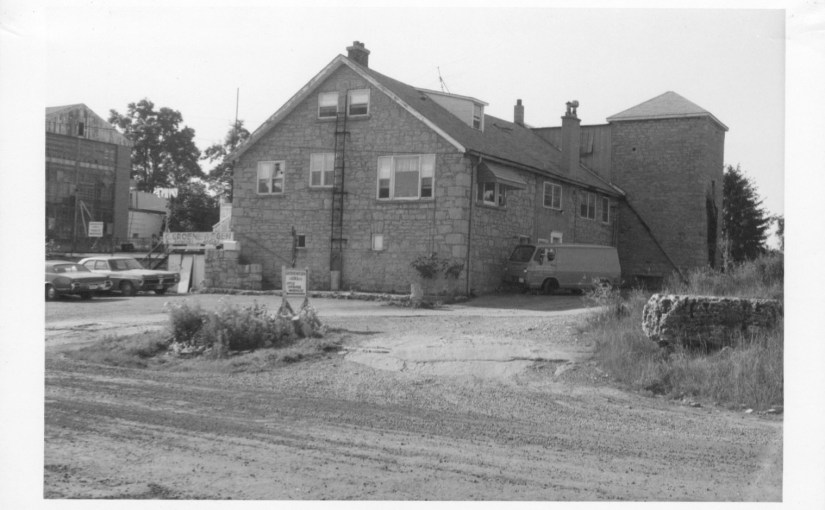


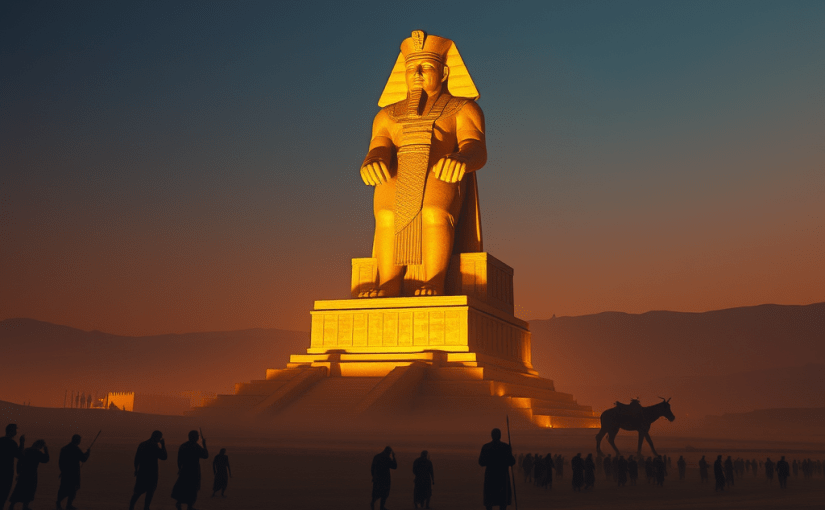






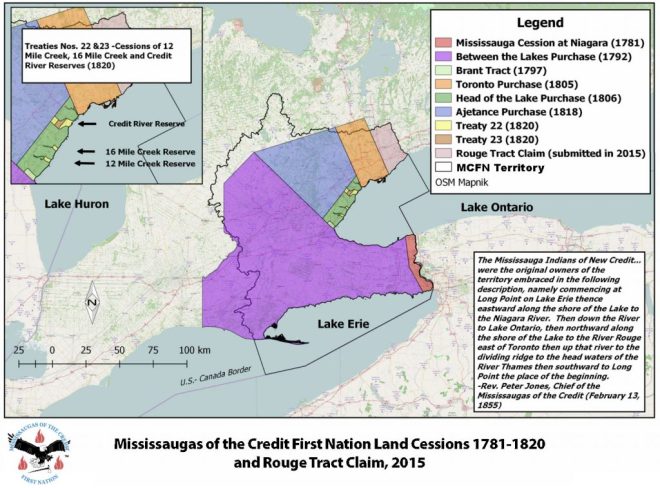








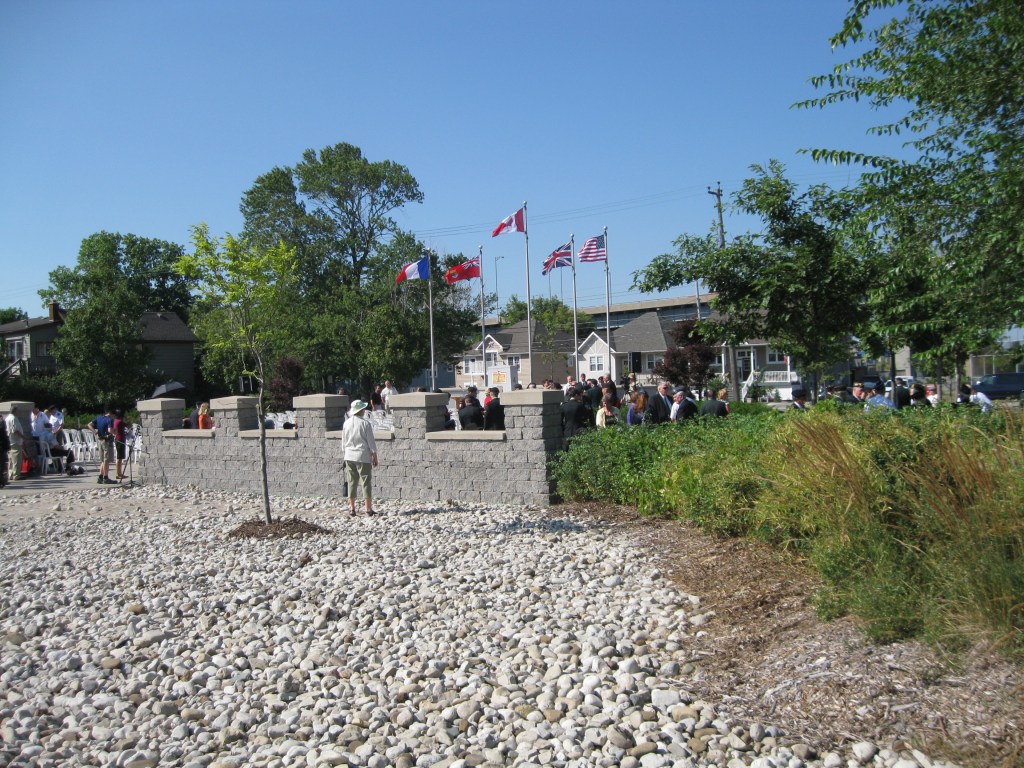


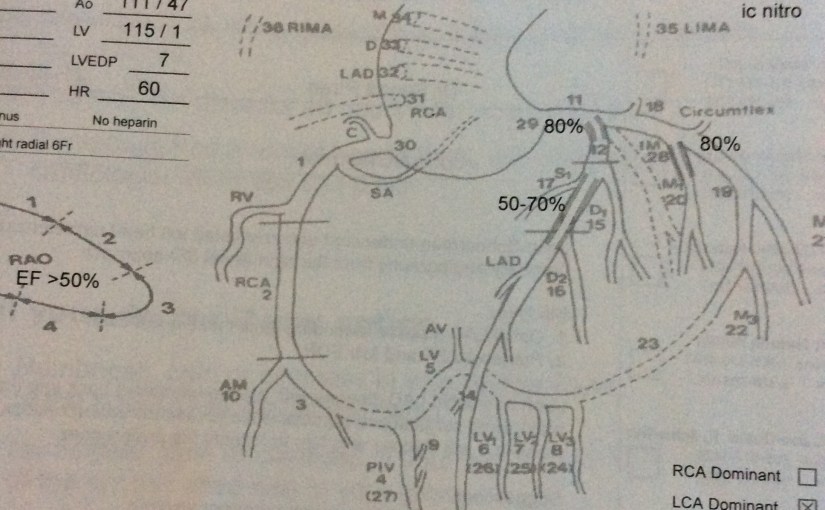












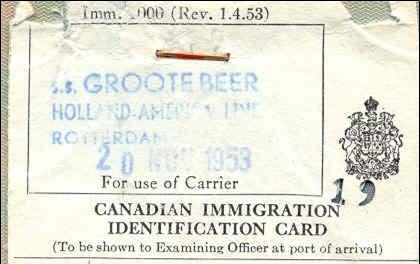



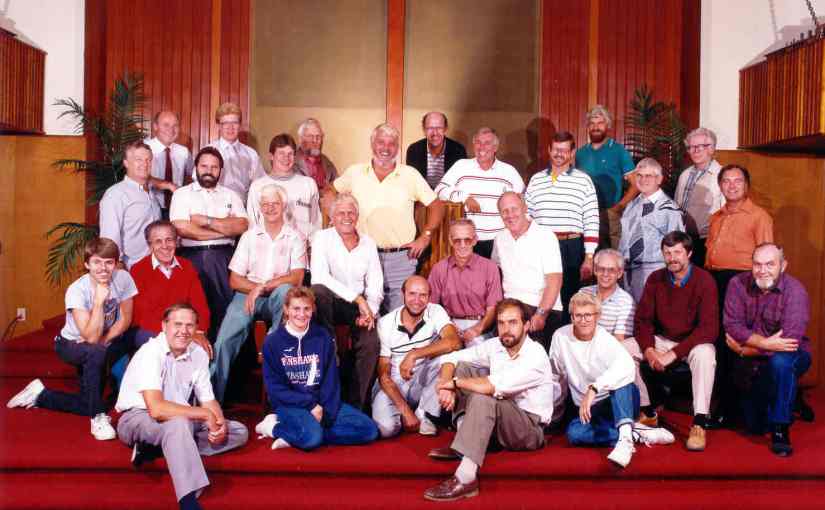

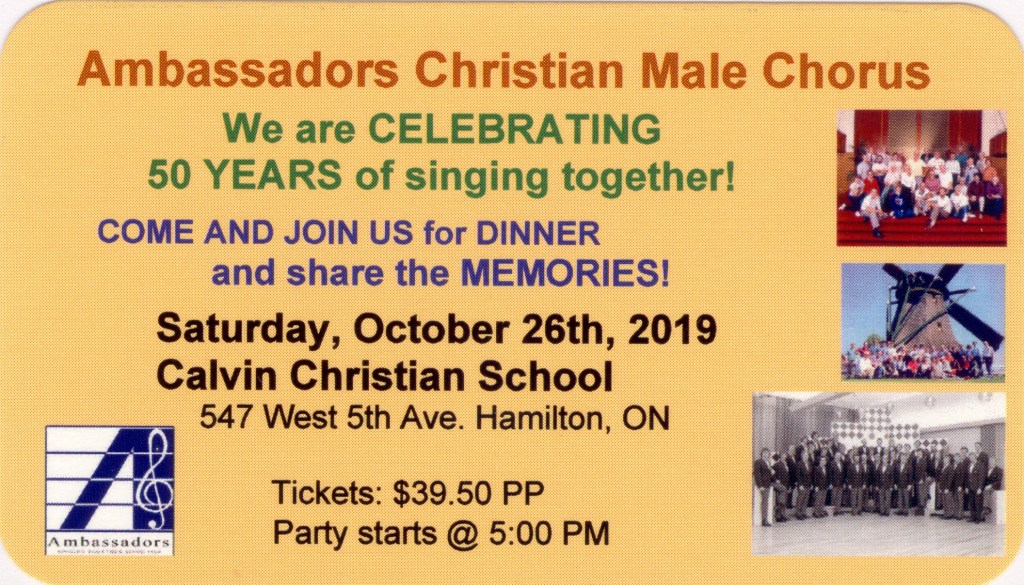


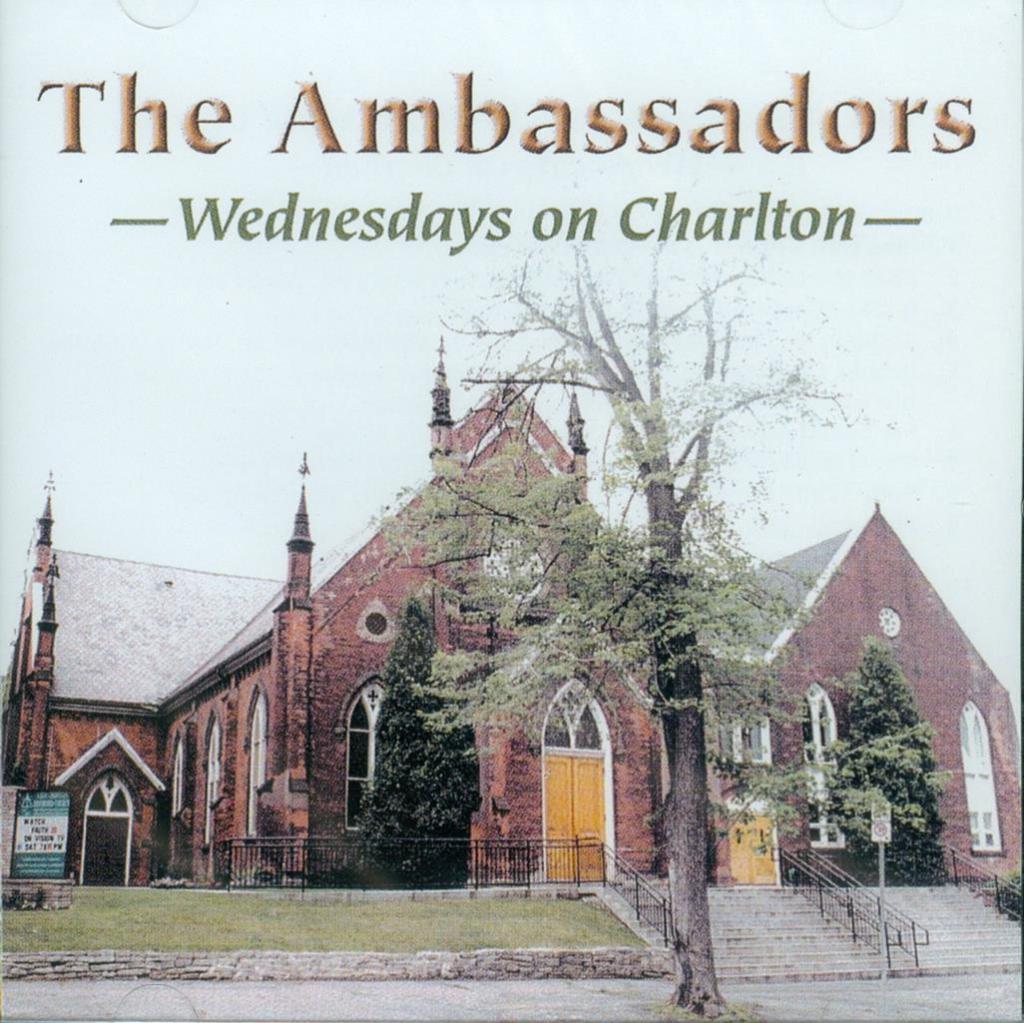

 Sept 27, 2024


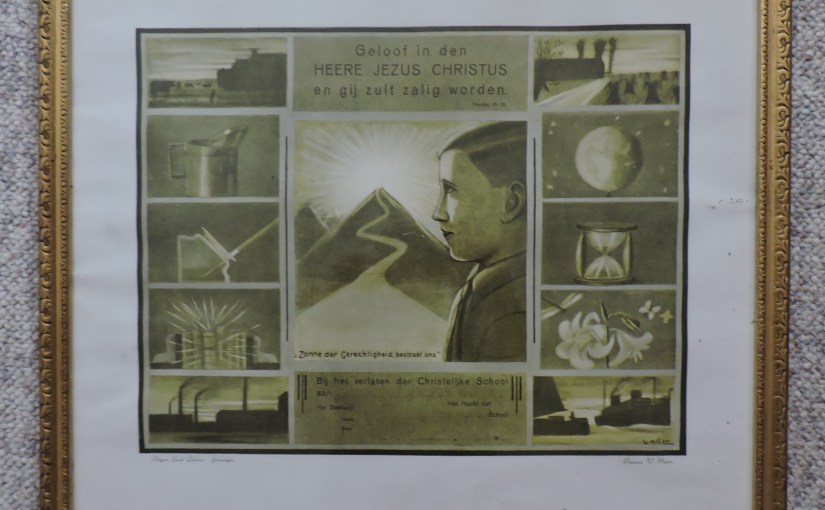

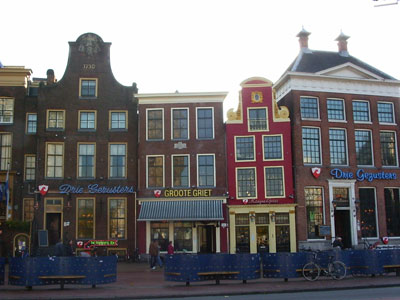
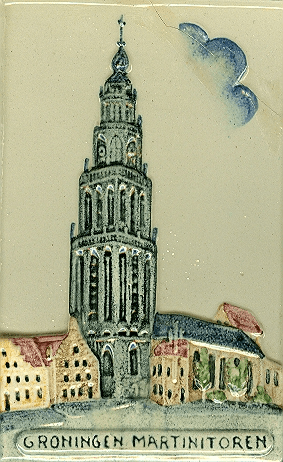

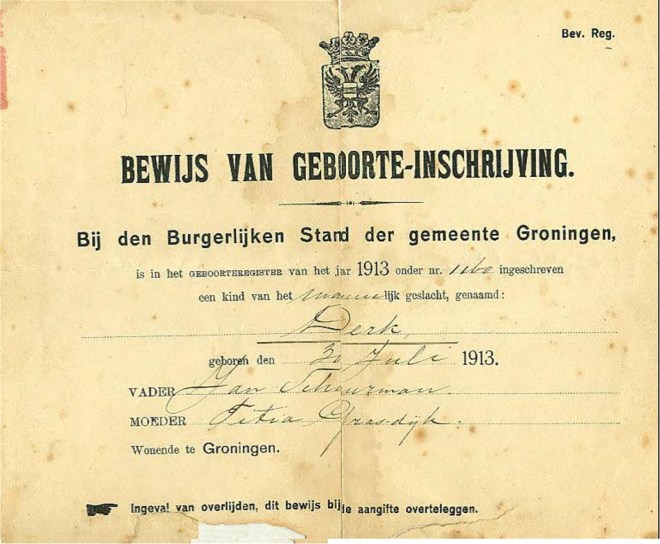
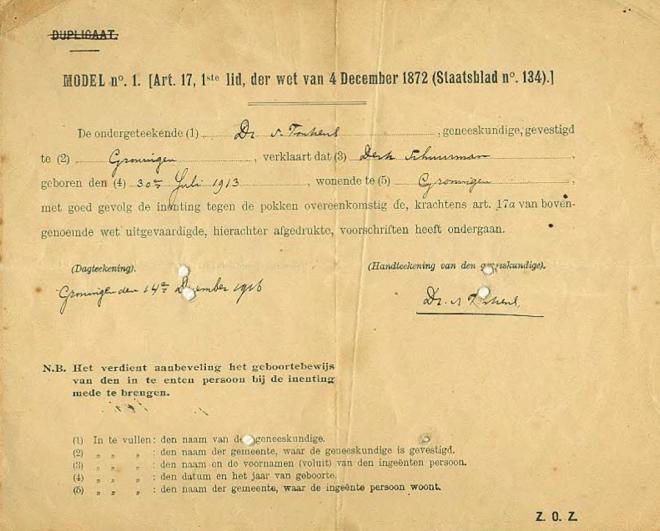
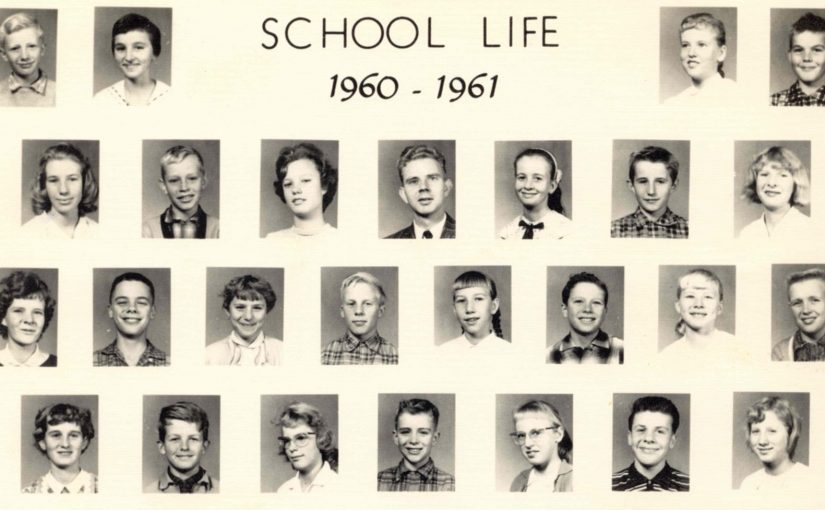
 On the Road
